

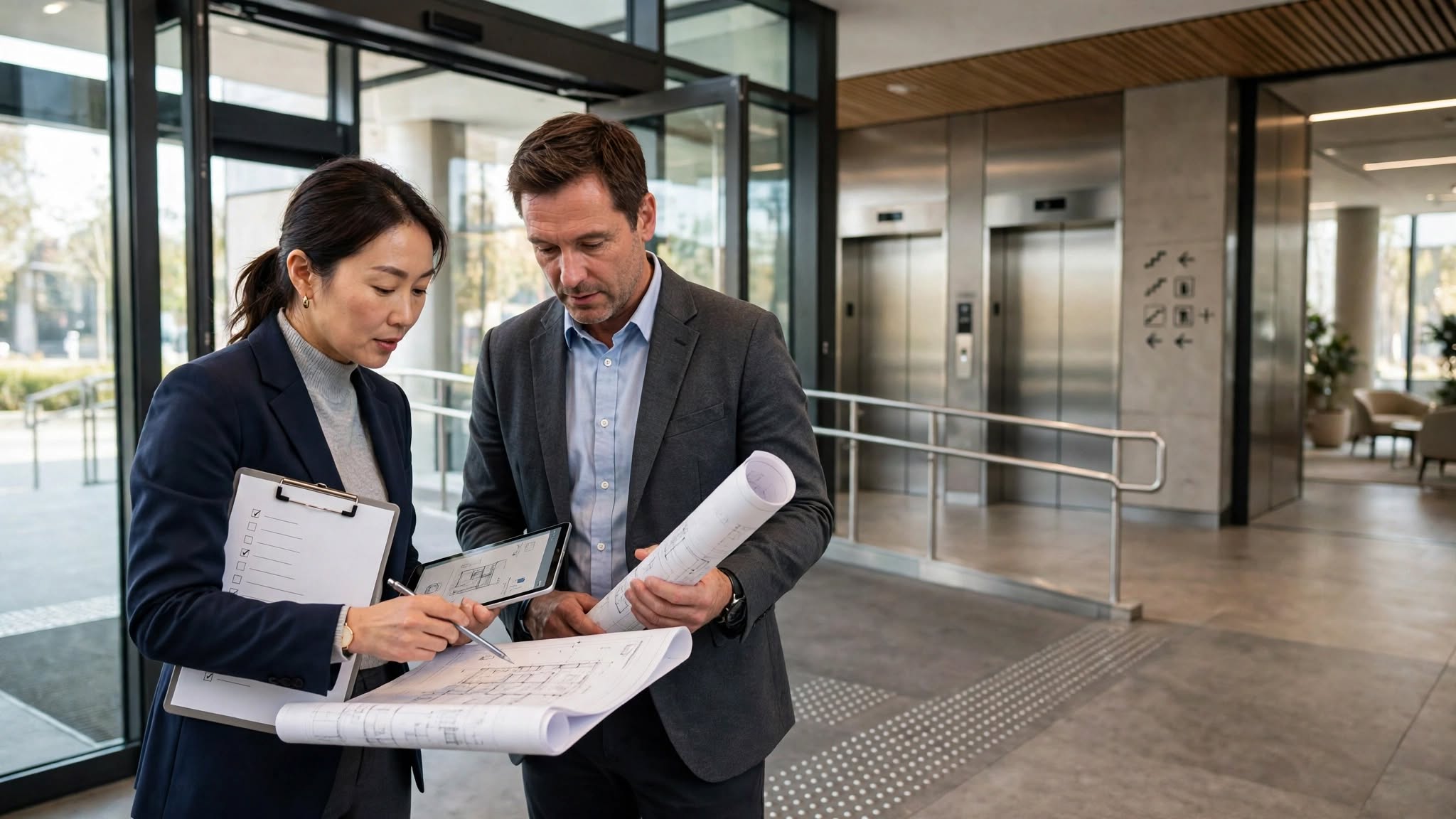
Certification rarely fails on the day of the review. It fails months earlier, when nobody checked whether the plan, the drawings and the evidence lined up. An accessibility certification consultant helps you catch those gaps in time, and this article explains when to bring one in and what to expect.
Certification Is a Milestone, Not a Starting Point
Certification, authority review and project-specific approvals sit at the end of a long process. What decides the outcome is the work done before them. A coordinated accessibility strategy sets that work up by embedding accessibility and universal design across planning, design, construction, operation and maintenance, instead of leaving it as a late-stage checklist.
The strategy defines objectives, user needs, stakeholder roles and short, medium and long-term actions. Skipping it carries real risks: fragmented access, inaccessible user journeys, non-compliance, costly redesign and operational limitations.
Think of the strategy as the brief and the readiness review as the check against it. Both reduce the chance that a problem first appears when a reviewer, rather than the project team, notices it.
A readiness review is the point where that plan meets the requirements of a specific approval. If the groundwork is sound, the review mostly confirms it. If the groundwork is missing, the review tends to uncover problems that are expensive to fix at that late stage.
Three Project Stages, Three Kinds of Support
A readiness review can be applied to a design, a completed development or an existing facility, and the consultant’s focus shifts with each.
For a design, attention falls on drawings and checklists, where changes cost the least. For a completed development, the question is whether what was built matches what was designed. For an existing facility, the review looks at current conditions and at what evidence exists to support them.
In every case, the first task is to confirm which requirements apply. These may come from local accessibility schemes, certification frameworks, client standards or obligations specific to a jurisdiction. An accessibility consultant who asks about this at the start, rather than assuming, is showing the right instincts.
Existing facilities deserve particular care, because evidence may be scattered across files or missing altogether. Pulling it together early makes the review quicker and the gaps clearer.
The earlier the review, the cheaper the correction. A project that reviews before formal submission has room to adjust, while one that finds the same problems during inspection has very little.
What a Consultant Checks Against the Plan
The review looks for gaps in accessible routes, entrances, parking, toilets, vertical circulation, signage, wayfinding, service areas, emergency provisions and supporting documentation. The work typically includes:
- Assessment of key accessibility provisions
- Identification of non-compliances and approval risks
- Practical recommendations before formal submission or inspection
- Help organising drawings, evidence and compliance records
Compare that with the topics a strategy covers: arrival and entry, circulation, facilities, wayfinding and signage, sensory conditions and emergency egress. The overlap is deliberate. In effect, the consultant tests whether your accessibility strategy survived the move from paper to a real building.
Notice that the list ends with practical recommendations. A finding with no action attached is of limited use to a project manager working to a deadline.
Documentation counts as much as design. Reviewers need to find evidence quickly, so organised drawings and compliance records improve submission quality and reduce late-stage redesign.
Questions to Ask Before You Appoint One
Hiring decisions get easier with a short list of questions:
- Which requirements apply to this project, and how will you confirm them?
- Will the review cover drawings only, or site conditions as well?
- How will missing evidence be identified and tracked?
- What will the recommendations look like before submission?
The answers show whether an accessibility certification consultant understands your approval route or is applying a generic template. Specific answers, tied to your project type and location, are worth more than a polished general pitch.
Agree who will receive the recommendations and who will act on them, so nothing sits unowned after the review.
Share what you already have at the outset. If a strategy document exists, hand it over along with drawings and checklists. The more the consultant can see, the more specific the findings will be, and the fewer surprises will appear close to the deadline.
Conclusion
Certification goes best when the plan comes first and the review confirms it. Bring a consultant in early, agree which requirements apply and keep your evidence organised. If your project does not yet have a clear framework, developing an accessibility strategy is a sensible place to begin, and the Vortex Access team is happy to talk it through.
FAQs
1. When should a readiness review happen?
Ideally before formal submission or inspection, while there is still time to correct drawings and gather evidence.
2. Which projects can be reviewed?
Designs, completed developments and existing facilities can all be reviewed.
3. Does the review include a site visit?
Where applicable, yes. A site readiness review sits alongside the desktop review of drawings, checklists and supporting documents.
4. What if evidence is missing?
The review identifies missing information or evidence, so it can be gathered before the formal review.