

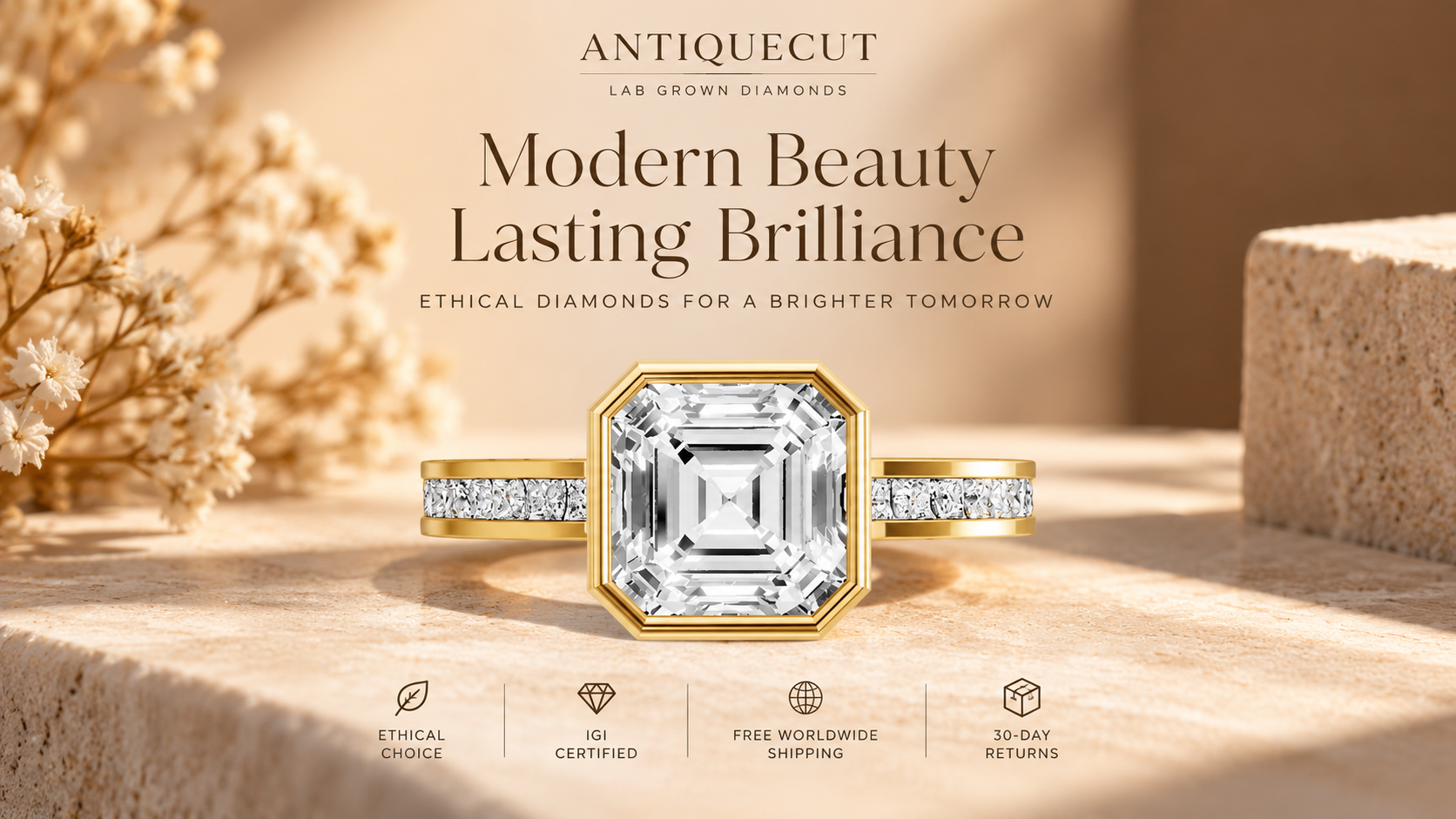
Choosing an engagement ring involves more than selecting a diamond. The setting affects how the stone looks, how the ring feels on your hand, and how well it fits into your everyday routine. Bezel engagement rings are known for surrounding the center stone with a metal rim, giving the ring a distinct appearance while holding the diamond securely.
Unlike prong settings, which use small metal claws around the stone, a bezel setting places metal around the stone’s outer edge. This construction can create a smooth surface with fewer raised parts, making it an option worth considering for people who prefer a practical ring design.
Whether you are looking for a simple solitaire, a detailed setting, or a lab-grown diamond option, understanding the differences between bezel designs can make the selection process easier.
What Is a Bezel Engagement Ring?
A bezel setting holds a gemstone with a thin metal rim that follows the shape of the stone. The metal surrounds part or all of the stone’s edge and keeps it positioned within the setting.
The design can be either full or partial. A full bezel surrounds the entire perimeter of the center stone, while a partial bezel leaves sections of the stone’s edge exposed. Both styles can provide a distinctive look, but they create different visual effects.
The choice also depends on the shape of the diamond. Round, oval, pear, emerald, marquise, and other cuts can all be paired with bezel settings. The metal rim is normally shaped specifically around the stone, which allows the setting to follow its outline.
For someone who wants a ring with clean lines and a secure stone setting, a bezel can be a practical option.
Why Consider Bezel Set Engagement Rings?
There are several reasons buyers consider bezel set engagement rings when comparing engagement ring settings.
One benefit is the smooth profile. Since the metal surrounds the diamond instead of using individual prongs, there are fewer exposed components that can catch on clothing or other materials.
A bezel can also provide additional protection around the edge of the diamond. This can be useful for people who work with their hands, exercise frequently, or simply prefer a ring that does not have many protruding details.
Another consideration is maintenance. Prong settings need periodic inspection because individual prongs can become loose or worn over time. A bezel has a different construction, although it still needs professional inspection and cleaning.
The setting also gives the ring a recognizable appearance. It can work well with simple bands, decorative shanks, mixed metals, and different center-stone shapes.
Choosing the Right Diamond Shape
The center diamond has a major influence on the final appearance of a bezel ring. Each shape interacts with the surrounding metal differently.
Round Diamond
A round diamond paired with a bezel creates a balanced shape. The circular metal border follows the stone naturally and can work particularly well in a simple solitaire design.
Oval Diamond
An oval center stone gives a longer appearance across the finger. A bezel can follow the curved outline while creating a smooth frame around the diamond.
Emerald Cut
Emerald-cut diamonds have long straight edges and clipped corners. A bezel can emphasize these geometric lines and give the ring a structured appearance.
Pear Shape
Pear-shaped diamonds combine a rounded end with a pointed tip. A properly fitted bezel can follow the outline while protecting the pointed end of the stone.
Marquise Diamond
The elongated shape of a marquise diamond creates a distinctive profile. A bezel can highlight the length of the stone while creating a continuous metal border.
When choosing a shape, consider more than appearance. Think about your preferred ring proportions, finger shape, daily activities, and how the engagement ring will sit beside a wedding band.
Bezel Diamond Engagement Ring Designs
A bezel diamond engagement ring does not have to follow one particular style. The setting can be incorporated into several ring designs.
A simple solitaire places most of the attention on the center stone. This can be a good option for someone who prefers a clean ring with minimal additional details.
A bezel can also be paired with side stones. Smaller diamonds placed along the band can add additional detail without changing the main structure of the center setting.
Another option is a bezel ring with a split or shaped shank. These designs can introduce more visual interest while keeping the center stone enclosed by metal.
Metal choice also changes the overall character of the ring. White gold creates a neutral appearance around a colorless diamond, while yellow gold creates a contrast between the center stone and the setting. Rose gold offers another color option for buyers who want something different.
Full Bezel vs. Partial Bezel
When comparing bezel rings, one important decision is how much of the diamond should be surrounded by metal.
A full bezel covers the entire outer edge of the stone. It gives the ring a continuous border and can provide a secure hold.
A partial bezel uses metal around selected sections of the stone. This allows more of the diamond’s edge to remain visible and can create a lighter visual effect.
Neither option is automatically right for everyone. The choice depends on your preferred appearance, diamond shape, and how you plan to wear the ring.
If you like the idea of a bezel but want more of the diamond’s outline to remain visible, a partial design may be worth considering.
When a Bezel Solitaire Engagement Ring Makes Sense
A bezel solitaire engagement ring keeps the design focused on one center stone. There are no side stones competing for attention, so the shape and size of the center diamond become the main visual features.
This style can work well for someone who likes a straightforward ring. It can also make pairing the engagement ring with a wedding band easier because there are fewer decorative elements along the shank.
Before purchasing, check the space between the engagement ring and your preferred wedding band. Some bezel settings sit higher than others, while certain designs are made to sit close to a band.
If you plan to wear both rings together every day, this detail is worth considering before making your final choice.
Unique Bezel Engagement Rings for Individual Style
Not every bezel ring needs to look simple. Unique bezel engagement rings can include unusual diamond shapes, mixed metals, decorative bands, asymmetrical details, or custom proportions.
An east-west oval bezel, for example, places the elongated stone horizontally across the finger instead of following the traditional vertical orientation.
You can also combine a bezel center with a textured band, small accent stones, or contrasting metal colors. These details allow the basic bezel construction to become part of a more personal design.
When considering a unique design, make sure the unusual details still work with your lifestyle. A ring should look good, but it should also be comfortable enough for regular wear.
Lab-Grown Bezel Engagement Ring Options
A lab grown bezel engagement ring combines a bezel setting with a laboratory-grown diamond. Lab-grown diamonds have the same crystal structure and chemical composition as natural diamonds, while their origin differs.
For buyers considering lab-grown stones, the setting options are broadly similar to those available for mined diamonds. You can choose from different shapes, sizes, metals, and ring designs.
One advantage of starting with the setting first is that it helps narrow the search. Once you decide that you prefer a bezel, you can compare different diamond shapes and sizes within that style.
If you are interested in different bezel designs and center-stone options, you can explore collection of bezel engagement rings to compare styles in one place.
How to Choose the Right Metal
The metal surrounding the diamond affects both the color contrast and the overall appearance of the ring.
White gold offers a neutral look and pairs naturally with colorless diamonds.
Yellow gold creates a stronger contrast between the metal and the center stone. It can also give the ring a warmer appearance.
Rose gold has a pink-toned color and can provide a different option for buyers who want something outside traditional white and yellow gold.
The metal should also suit your existing jewelry. If you regularly wear a particular metal color, choosing a similar option can make your engagement ring easier to coordinate with other pieces.
Consider Your Everyday Routine
Your lifestyle should play a role in selecting an engagement ring setting.
If you frequently work with your hands, a smooth bezel may be worth considering because it has fewer raised components than many prong settings.
If you rarely remove your ring, consider how easy the setting will be to clean and inspect. Dirt can collect around any engagement ring, including a bezel, so regular cleaning remains important.
You should also consider ring comfort. Try different band widths and profiles when possible. A setting that looks attractive online may feel different when worn.
Setting a Budget for Your Ring
The center diamond is usually one of the largest parts of an engagement ring budget, but the setting also contributes to the final cost.
Start by deciding how much you are comfortable spending overall. Then consider how much of that amount should go toward the center stone, setting, and any additional diamonds.
Lab-grown diamonds may provide another way to compare different stone sizes and specifications within a set budget. Instead of focusing only on carat weight, compare cut quality, color, clarity, certification, and overall proportions.
A larger stone is not automatically the right choice. The best combination depends on what matters most to you.
Check the Ring Before Buying
Before ordering a bezel engagement ring, review the important details carefully.
Check the exact diamond shape and carat weight. Look at the metal type and purity. If the diamond is certified, review the certification details.
Pay attention to the ring size as well. A properly fitted ring should feel secure without being uncomfortably tight.
If you plan to wear a wedding band alongside the engagement ring, check whether the two designs can sit together comfortably.
For custom-made designs, confirm the measurements, metal specifications, center-stone details, and return or resizing policies before placing an order.
Antiquecut offers different ring designs for buyers who want to compare bezel settings, diamond shapes, and metal options before choosing a final style.
Final Thoughts
A bezel setting can be a practical and distinctive choice for an engagement ring. Its surrounding metal rim gives the center stone a defined border while creating a smooth profile that suits many everyday lifestyles.
The right design ultimately comes down to your diamond shape, preferred metal, budget, comfort, and personal taste. Compare full and partial bezels, consider solitaire and multi-stone designs, and think about how the ring will work with your wedding band.
Whether you prefer a simple round diamond, an elongated oval, an emerald cut, or a lab-grown center stone, taking time to compare the setting details can help you choose a ring that feels right for your everyday life.