

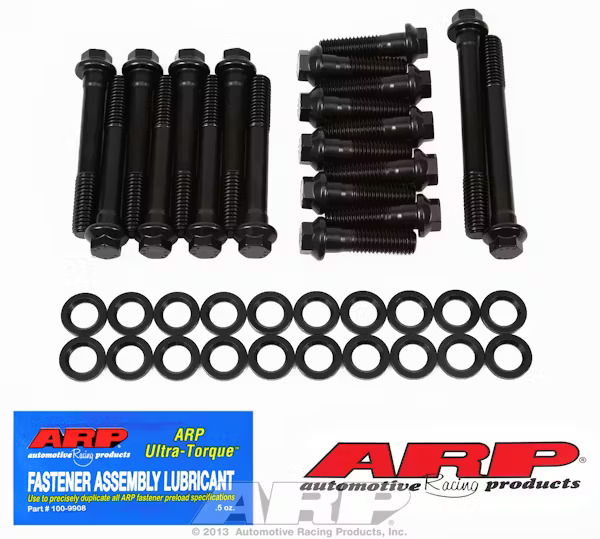
Engine durability depends on more than quality components and regular maintenance. The fasteners holding critical engine parts together also play an important role in maintaining reliability under demanding conditions. ARP Fasteners are engineered for high-strength applications where standard hardware may not provide the required clamping force or resistance to extreme loads. From performance street engines to dedicated racing builds, high-quality fasteners can help maintain consistent assembly integrity over time.
Strong Clamping Force for Critical Engine Components
One of the primary functions of an engine fastener is to maintain the correct clamping force between components. During operation, engines experience vibration, heat cycles, combustion pressure, and mechanical loads. These forces can place significant stress on bolts and studs.
ARP Fasteners are manufactured with performance applications in mind, providing strong and consistent clamping characteristics. Proper clamping helps keep components securely positioned and reduces the risk of movement, loosening, or gasket failure. This is especially important around cylinder heads, main caps, connecting rods, and other heavily loaded areas.
Resistance to Extreme Engine Conditions
High-performance engines operate under conditions that can be considerably more demanding than those encountered by standard vehicles. Increased horsepower, higher RPM, boost pressure, and repeated heat cycles can place additional stress on engine hardware.
Quality fasteners need to withstand these forces without compromising their mechanical properties. ARP Fasteners are available in materials and specifications designed for different performance requirements. Selecting the appropriate fastener for the application can provide added resistance to the stresses generated during hard acceleration, competition, and extended engine operation.
Supporting Cylinder Head and Gasket Stability
Cylinder head fasteners are particularly important for maintaining engine durability. Combustion pressure creates substantial forces between the cylinder head and engine block. If clamping is inconsistent, the head gasket can be exposed to additional stress.
High-strength studs and bolts can help maintain stable clamping across the cylinder head assembly when properly selected and installed. Consistent torque procedures and correct installation are equally important. Together, suitable fasteners and proper assembly practices can help reduce the likelihood of sealing problems and support dependable engine operation.
Protecting Engine Components During High RPM Operation
Increasing engine speed also increases mechanical loads on internal components. Connecting rods, main bearings, and crankshaft assemblies must remain securely positioned as the engine cycles thousands of times per minute.
Fasteners used in these areas must be capable of handling repeated loading. Performance-grade hardware can provide the strength and consistency required for demanding applications. Using the correct fasteners helps maintain the integrity of critical assemblies and can contribute to more dependable operation when an engine is subjected to high RPM and increased power output.
Proper Installation Is Essential
Even the strongest fastener cannot perform correctly if it is installed improperly. Torque specifications, lubrication requirements, tightening sequences, and thread engagement can all affect final clamping force.
When installing ARP Fasteners, builders should follow the manufacturer’s recommended procedures for the specific product. Using the correct torque method and appropriate lubricant where specified helps ensure the fastener achieves the intended preload. Engine builders should also verify that the selected fastener is compatible with the specific component and application.
Choosing Fasteners for Performance Applications
Every engine build has different requirements. A naturally aspirated street engine may have different fastener needs than a turbocharged race engine producing substantially higher cylinder pressure. Factors such as horsepower, RPM, boost, engine configuration, and intended use should be considered when selecting hardware.
Choosing application-specific ARP Fasteners allows builders to match the hardware to the demands of the engine. This approach supports reliable assembly while helping critical components withstand the stresses associated with performance driving.
Conclusion
Long-term engine durability depends on the complete quality of the build, including the hardware securing its most important components. ARP Fasteners provide high-strength options for applications where reliable clamping and resistance to demanding operating conditions are essential. When matched correctly to the engine and installed according to proper specifications, performance fasteners can help protect critical assemblies, maintain sealing integrity, and support consistent operation over time. For performance enthusiasts and engine builders, investing in suitable high-quality fasteners is an important part of creating a durable and dependable engine.