

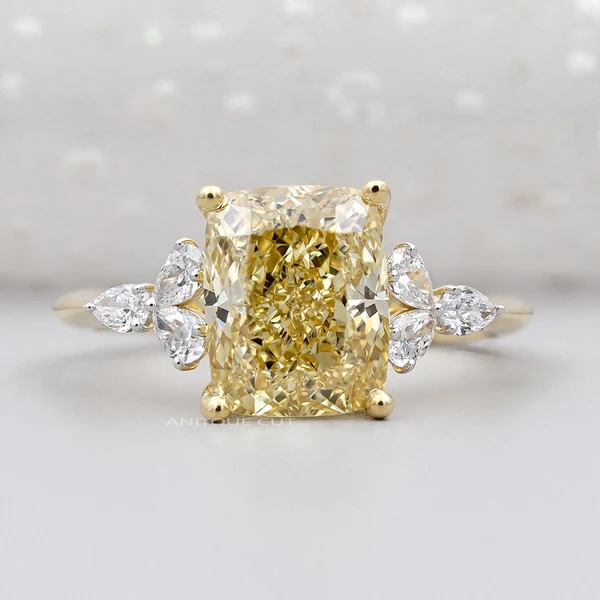
Choosing a diamond shape is one of the first decisions to make when buying a ring. The shape affects how the center stone looks, how large it appears from above, and how it works with the setting. With yellow diamonds, this choice can be even more important because the shape can change how the color is seen across the stone.
There is no single shape that works for everyone. Some people prefer a clean, balanced look, while others want a stone with longer lines or a softer outline. The best choice depends on your personal taste, finger proportions, ring setting, and budget.
Round Cut for a Classic Look
A round cut is a strong choice if you want a familiar diamond shape. Its symmetrical outline works well with many ring settings, including solitaire, halo, and three-stone designs.
A yellow round diamond can look rich and noticeable because the shape gives the color plenty of room to show. It is also a good option if you want your ring to work with different wedding band styles later.
If you like traditional jewelry but still want a colored center stone, a round shape is worth considering.
Oval Cut for a Longer Appearance
Oval diamonds are popular with buyers who want a longer-looking center stone. Their stretched outline can make the finger appear longer, which can be helpful for people who prefer an elongated ring design.
The shape also gives you plenty of surface area to enjoy the yellow color. An oval yellow diamond can work especially well in a simple solitaire setting, where the center stone remains the main focus.
Before choosing one, look closely at the stone’s length-to-width ratio. A wider oval will have a different appearance from a long, narrow oval, so viewing the actual diamond is important.
Cushion Cut for a Soft, Full Shape
Cushion cut diamonds have rounded corners and a fuller outline. They can be a good choice if you want something softer than a sharp square or rectangular shape.
This shape can be especially appealing for yellow diamonds because its larger facets can show the stone’s color clearly. Cushion cuts are available in different proportions, from almost square to noticeably rectangular.
For a ring with a warm, slightly vintage-inspired feel, a cushion yellow diamond can be a lovely option.
Emerald Cut for Clean Lines
An emerald cut is easy to recognize because of its long rectangular shape and broad, step-cut facets. Instead of focusing on intense flashes of light, this cut gives the stone a more open appearance.
Because the facets are larger, inclusions and color differences can be easier to notice. That means you should pay close attention to the diamond’s clarity and overall appearance before purchasing.
An emerald yellow diamond works well when you want the center stone to have a strong shape without a complicated setting.
Radiant Cut for More Visual Impact
Radiant cuts combine a rectangular or square outline with brilliant-style faceting. This gives you an interesting middle ground if you like the shape of an emerald cut but want more light return.
A radiant yellow diamond can look especially full in a solitaire or halo setting. The shape also offers flexibility because you can choose a square-looking radiant or a longer rectangular version.
If you are unsure between cushion and emerald, comparing them with a radiant cut may help you decide what type of faceting and outline you prefer.
Pear and Marquise Shapes for an Elongated Style
Pear and marquise diamonds both have pointed ends and longer outlines. These shapes can make the center stone appear larger from above and can create a distinctive look.
A pear-shaped yellow diamond can be worn with the point facing either toward or away from the hand. A marquise shape has a more symmetrical pointed design and can create strong length across the finger.
For both shapes, the setting needs to protect the pointed ends properly. Prongs placed at the tips can help reduce the chance of accidental damage.
Think About Your Ring Setting
The diamond shape should work with the setting rather than being chosen separately. A solitaire allows the center stone to stand on its own, while a halo can make the diamond look larger by surrounding it with smaller stones.
Three-stone settings can add more visual weight around the center diamond. A bezel setting can give additional protection and create a cleaner outline.
When comparing options, look at the complete ring instead of judging the loose diamond alone. A shape that looks perfect by itself may look different once it is placed into a particular setting.
Consider Your Finger Proportions
Your hand can also help guide your decision. Longer shapes such as oval, pear, marquise, and elongated radiant cuts can create a lengthened appearance on the finger.
Round and cushion shapes can give more width and balance. Square or shorter rectangular stones may work well if you prefer a fuller center rather than an elongated one.
There are no strict rules here. The best test is to try different shapes on your own hand and see which one feels right.
Think About Color Before Buying
Yellow diamonds are available in different levels of color, and the visible color can vary from stone to stone. Do not judge the diamond only by its grading information. Look at the actual stone under different lighting conditions when possible.
For buyers who want a stronger yellow appearance, comparing several diamonds side by side can make the differences much easier to see.
Explore Collection of Yellow Diamond Engagement Ring options to compare different shapes, settings, and designs before deciding which one suits your ring idea. Antiquecut can also be considered when you are comparing choices for a lab-grown yellow diamond ring.
Keep Your Budget in Mind
Your budget should be part of the decision from the beginning. Different shapes can have different pricing, and the final cost also depends on carat weight, color, clarity, certification, and whether the diamond is lab-grown or natural.
Instead of choosing the largest stone you can find, decide which features matter most to you. You may prefer a slightly smaller diamond with stronger color or better overall appearance.
For a lab-grown option, comparing several shapes at the same carat weight can help you understand how much your budget can cover.
Check the Diamond Before You Buy
Once you have chosen a preferred shape, examine the individual diamond carefully. Two diamonds with the same shape and grading details can still look different.
Check the symmetry, proportions, color distribution, clarity, and how the stone looks from different angles. If buying online, review the available images, videos, grading report, and return policy.
Most importantly, choose the diamond that you genuinely enjoy looking at. A ring is something you may wear for many years, so your reaction to the actual stone matters more than simply following a popular trend.
Final Thoughts
The best yellow diamond shape is the one that fits your hand, your ring setting, your budget, and your personal taste. Round, oval, cushion, emerald, radiant, pear, and marquise shapes can all create very different results.
Take your time comparing them. Look at the outline, color, proportions, setting, and overall appearance together. When you find a shape that makes you excited to wear the ring, you are much closer to making the right choice.