

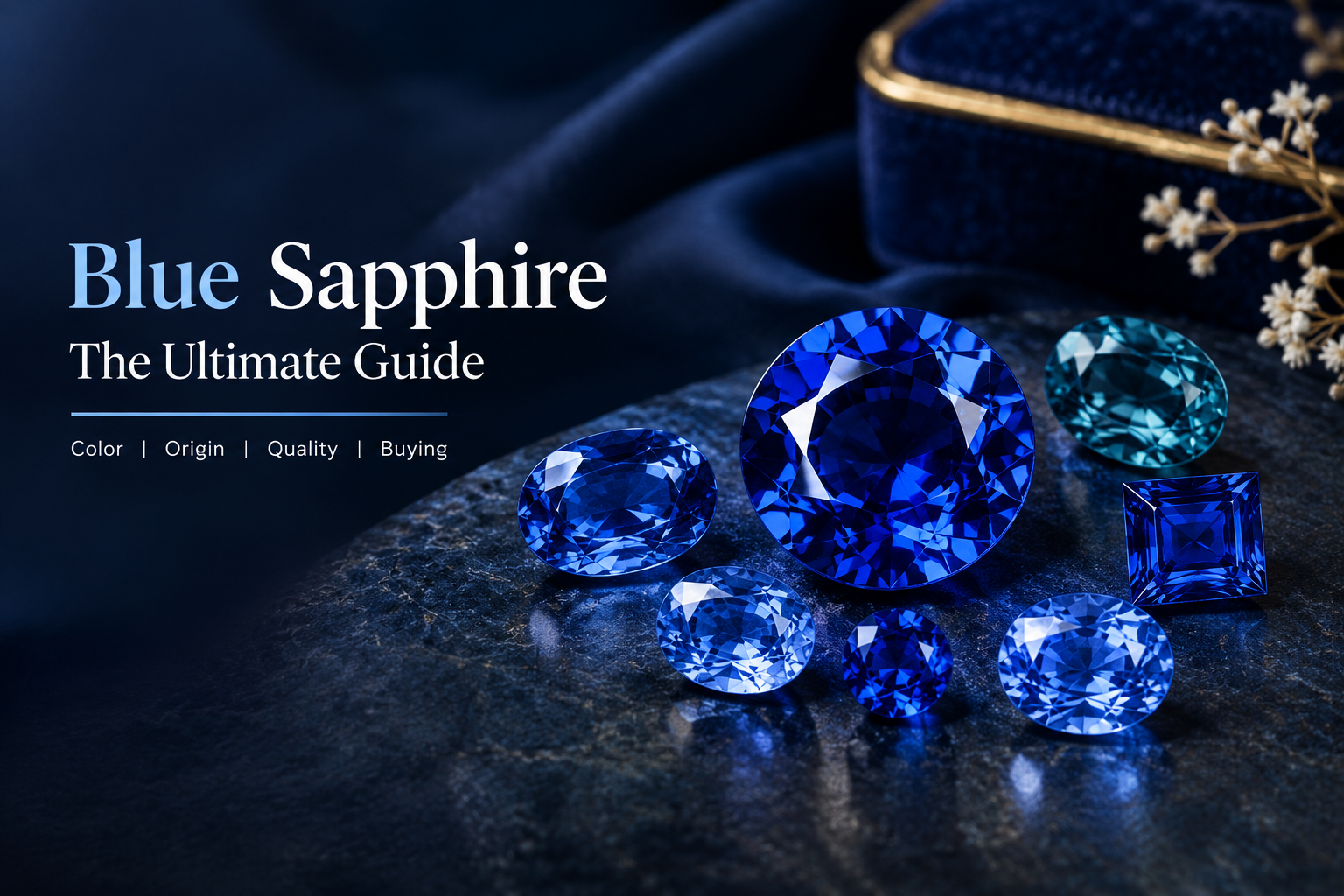
Natural blue sapphire is one of the most popular colored gemstones used in fine jewelry. Its durability, rich color and geological origin make it attractive to both jewelry buyers and gemstone collectors.
However, the term “blue sapphire” describes a broad category rather than one identical type of gemstone. Natural blue sapphires can differ significantly depending on where they formed, how they were treated, their color, clarity, cut and size.
Understanding these characteristics can help buyers make better decisions.
What Is Natural Blue Sapphire?
Natural blue sapphire is naturally formed corundum with a blue color.
Unlike laboratory-created sapphire, natural sapphire develops through geological processes over long periods.
Its internal inclusions can provide clues about its formation and treatment history.
Because natural gemstones form under different conditions, each sapphire can have a distinctive appearance.
Why Natural Sapphire Is Valuable
Natural sapphire is appreciated for several reasons.
Its durability makes it suitable for jewelry.
Its blue color provides a strong visual identity.
Its geological origin makes each gemstone unique.
And certain origins and untreated stones can have strong collector interest.
However, value depends on the individual gemstone rather than simply the word “natural.”
Blue Sapphire Color
Color remains one of the most important factors.
A buyer should examine:
Hue
Is the gemstone pure blue, violet-blue, greenish-blue or another variation?
Tone
Is it light, medium or very dark?
Saturation
Is the blue vivid and intense or muted?
These characteristics work together.
A sapphire with a balanced combination of hue, tone and saturation can appear more attractive than an excessively dark stone.
Kashmir Blue Sapphire
Kashmir sapphire has a legendary position in the gemstone world.
Historical Kashmir sapphires are known for highly desirable blue color and a soft, velvety visual appearance.
However, buyers should be careful when interpreting the word “Kashmir.”
A product described as Kashmir blue may refer to color terminology, while a geographic-origin claim requires evidence.
When origin materially affects value, laboratory documentation is advisable.
NW Gems currently offers natural products described as Kashmir blue sapphire, including vibrant and extra-fine options.
Montana Blue Sapphire
Montana is another interesting source.
Montana sapphires can display blue and blue-green colors.
Their American origin makes them attractive to buyers interested in domestically sourced gemstones.
The current NW Gems collection includes natural fine blue Montana sapphire as well as blue-green Montana sapphire.
Sri Lankan Blue Sapphire
Sri Lanka is one of the historically important sapphire-producing regions.
Blue sapphires from Sri Lanka can display a variety of blue shades.
The NW Gems collection includes Sri Lankan blue sapphire options such as cornflower blue and dark blue stones.
Natural Blue Sapphire Treatment
Treatment is extremely important when buying natural sapphire.
Heat treatment is commonly used in the gemstone industry.
Heating may improve color or clarity.
A natural sapphire that has been heated remains natural in origin, but treatment should be disclosed.
Some buyers specifically prefer unheated stones, particularly collectors.
Others are comfortable with heat-treated gemstones because they may provide an attractive appearance at a different price point.
How to Read Treatment Information
Look for explicit terms such as:
- Heated
- Heat only
- Unheated
- Untreated
- Diffusion treated
- Other enhancement
Do not assume that “natural” means “untreated.”
Natural describes the gemstone’s origin.
Treatment describes whether it has been enhanced.
NW Gems states that its gemstone listings provide treatment disclosure.
Blue Sapphire Clarity
Natural sapphires often contain inclusions.
Some inclusions can be acceptable or even useful in identifying natural origin.
However, large fractures or heavily included areas may affect durability and appearance.
For jewelry, evaluate clarity in relation to the stone’s size and purpose.
A small sapphire may look completely clean to the naked eye even if it contains microscopic inclusions.
Blue Sapphire Cut
Cut affects both appearance and usability.
Popular options include:
- Round brilliant
- Oval
- Princess
- Square step
- Cushion
- Emerald cut
Round cuts are versatile and symmetrical.
Princess cuts provide a modern square appearance.
Step cuts emphasize clean geometry.
The right choice depends on the jewelry design.
The NW Gems blue sapphire collection currently includes round diamond-cut, round faceted, princess and square-step options.
Blue Sapphire Size
Size should be evaluated in millimeters.
Carat weight alone does not describe the physical dimensions of a sapphire.
For a custom jewelry setting, the jeweler needs exact measurements.
NW Gems recommends millimeter measurements when selecting the correct gemstone size.
Natural Blue Sapphire for Collectors
Collectors may look for additional characteristics such as:
- Exceptional color
- Large size
- Rare origin
- Unusual characteristics
- Unheated status
- Laboratory documentation
- Historical importance
A collector-quality stone may be evaluated very differently from a commercial jewelry stone.
Blue Sapphire for Everyday Jewelry
Because sapphire has a Mohs hardness of 9, it is well suited to everyday jewelry.
This makes it particularly popular for engagement rings.
However, durability also depends on the gemstone’s internal condition and setting.
A sapphire with significant fractures should be handled more carefully.
How to Buy Natural Blue Sapphire
Before purchasing, check:
- Is the gemstone natural?
- What is the treatment?
- What is the color?
- What is the origin?
- What are the dimensions?
- What is the cut?
- What is the clarity?
- Is the photograph of the actual stone?
- Is documentation available?
- What is the return policy?
These questions can help prevent confusion.
Blue Sapphire and Digital Research
Gemstone buyers can now use online resources to compare stones before making purchasing decisions.
Technology also makes it easier to research gemstone terminology, treatment information, jewelry designs and market options.
CripsyWire is a technology-focused publication that covers AI, software, gadgets, online tools and practical digital guides, making it a useful resource for readers interested in technology alongside online shopping research.
Final Thoughts
Natural blue sapphire offers a combination of beauty, durability and geological individuality.
When choosing a stone, color should be considered alongside origin, treatment, clarity, cut and size.
Kashmir, Montana and Sri Lanka represent different sapphire traditions and sourcing contexts, while individual stones can vary considerably even within the same origin.
For buyers researching natural blue sapphires, the Sapphire Blue collection at NW Gems provides multiple natural options across different colors, origins and cuts.