

Sudden cardiac arrest can occur unexpectedly in workplaces, public buildings, educational facilities, and community settings. Having an automated external defibrillator (AED) available can be an important part of an organization’s emergency preparedness plan. However, selecting the right device involves more than comparing prices or choosing a familiar product name.
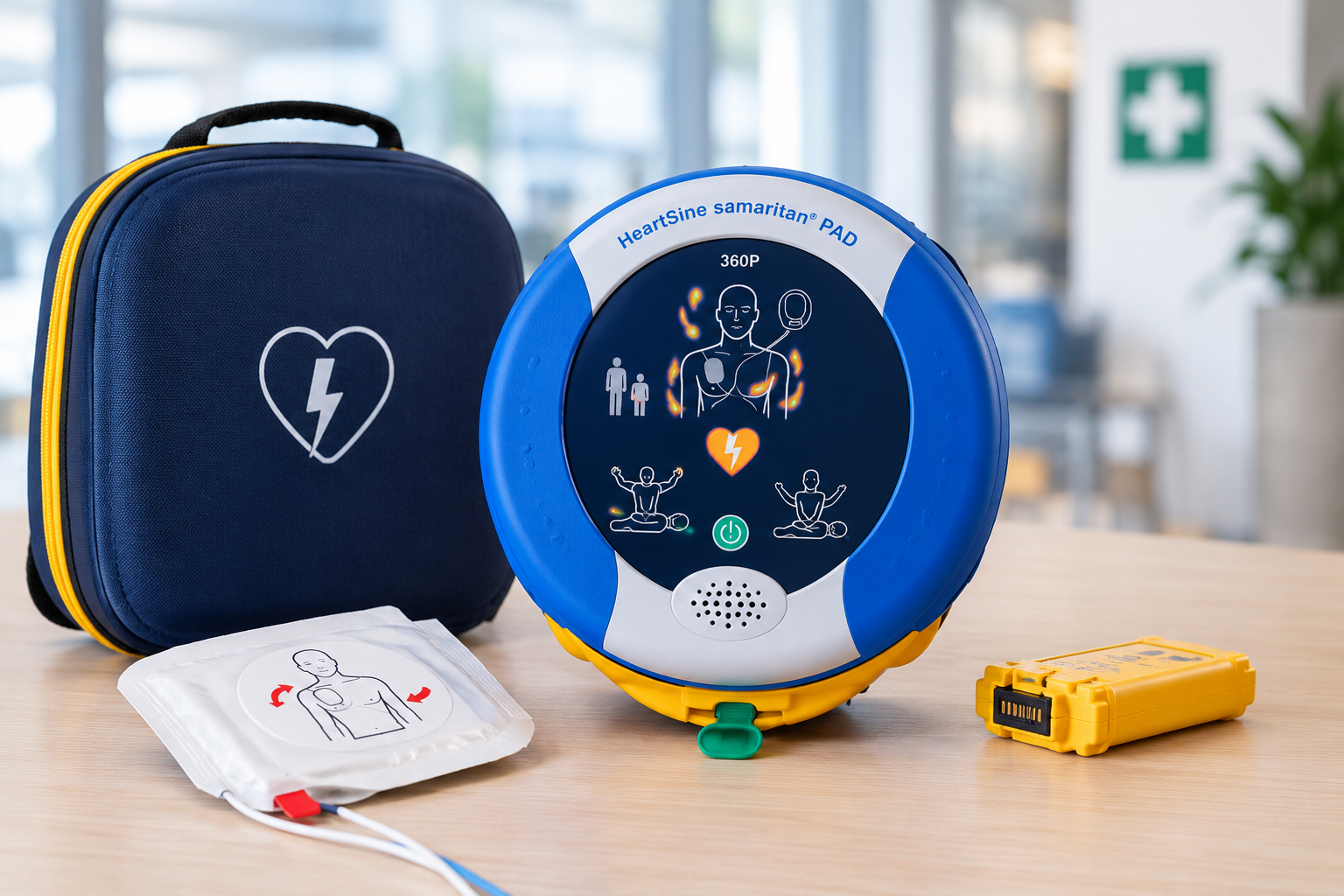
The HeartSine samaritan 360P is a fully automatic AED designed to provide voice-guided instructions during an emergency. Before purchasing this device, businesses and organizations should consider its features, intended environment, maintenance requirements, accessibility, and ongoing costs. Understanding these factors can help buyers make informed decisions about their emergency equipment needs.
1. Understand the Features of the HeartSine samaritan 360P
The first step is to understand how the HeartSine samaritan 360P operates and whether its features suit your organization’s requirements.
As a fully automatic AED, the device analyzes the heart rhythm and, when indicated, delivers a shock automatically after providing appropriate warnings. This differs from a semi-automatic AED, which requires a rescuer to press a shock button when the device advises one.
The HeartSine samaritan 360P also provides voice prompts to guide users through the response process. These instructions can be useful in stressful situations, although appropriate training remains important.
Before purchasing, review the manufacturer’s current product specifications, instructions, and intended use to confirm that the device is appropriate for your setting.
2. Consider Where the AED Will Be Used
The environment in which an AED will be installed should influence the purchasing decision. Offices, schools, retail locations, warehouses, sports facilities, and community buildings may have different emergency preparedness requirements.
Consider the number of people who use the premises, the size of the building, operating hours, and how quickly emergency equipment can be accessed. Larger facilities may need multiple AEDs or a carefully planned placement strategy to reduce retrieval time.
The HeartSine samaritan 360P is designed for emergency use, but buyers should review its environmental operating limits and storage requirements before selecting an installation location. Areas exposed to extreme temperatures, moisture, dust, or physical damage may require additional planning.
3. Check Portability and Storage Requirements
Portability can be an important consideration for organizations that need to move emergency equipment between locations. A compact AED may be easier to store, transport, and position in an accessible location.
When evaluating the HeartSine samaritan 360P, check the manufacturer’s specifications for device dimensions, weight, carrying options, and storage conditions. Consider whether the device will remain in one designated location or need to be transported for events, outdoor activities, or multiple work areas.
The storage location should be clearly identified and accessible to authorized personnel. Appropriate signage can help staff and visitors locate the device quickly during an emergency.
4. Evaluate Battery and Pad Replacement Requirements
AEDs require ongoing checks to ensure that essential components remain ready for use. Batteries and electrode pads have specified service lives and replacement requirements that should be included in the organization’s maintenance plan.
Before buying the HeartSine samaritan 360P, review the manufacturer’s information about its battery and electrode pad system, replacement intervals, storage conditions, and availability of compatible components.
Organizations should also understand how the device indicates its readiness status and what actions are required when an alert appears. Keeping a record of inspection dates and replacement schedules can help prevent expired components from remaining in service.
5. Review Maintenance and Readiness Checks
Selecting an AED is only the beginning of emergency preparedness. Regular checks are necessary to help ensure that the equipment remains accessible and ready for use.
A workplace AED checklist may include confirming that the device is present, checking its readiness indicator, inspecting the exterior for visible damage, verifying pad expiry dates, and ensuring that required accessories are available.
Staff should follow the manufacturer’s instructions for inspection, maintenance, and storage. Any warning or suspected fault should be addressed according to the relevant guidance rather than ignored.
Assigning responsibility for these checks can make maintenance more consistent and help organizations identify problems before the equipment is needed.
6. Consider Training and Emergency Procedures
Although fully automatic AEDs provide voice instructions, organizations should not rely on device prompts alone as a substitute for emergency planning or training.
Staff should understand how to recognize a possible cardiac arrest, contact emergency services, begin cardiopulmonary resuscitation (CPR), and retrieve and use an AED according to their training and local emergency guidance.
Businesses should also establish clear procedures identifying equipment locations, emergency contacts, and staff responsibilities. Practical training and periodic drills can help employees become more familiar with the response process.
When choosing an AED, consider how its instructions and operation fit into the organization’s existing first-aid arrangements.
7. Compare Total Cost and Supplier Support
The purchase price is only one part of the overall cost of owning an AED. Buyers should also consider replacement pads, battery-related costs, accessories, servicing requirements, warranty conditions, and product availability.
When comparing suppliers, look for clear specifications, genuine compatible components, transparent purchasing terms, and access to relevant product support. Confirm delivery arrangements and whether the device supplied meets the requirements of your intended location.
For Australian organizations, it is also sensible to review applicable workplace safety guidance and any relevant requirements for AED installation, maintenance, and use.
Where to Buy a Fully Automatic Defibrillator Online
Essentials International supplies workplace and healthcare products for organizations across Australia. Businesses exploring AED options can review product specifications, availability, and purchasing details before making a decision. If you are sourcing emergency equipment for your facility, explore Buy Fully Automatic Defibrillator Online to find relevant product information and assess whether the available options meet your organization’s requirements.
Conclusion
Selecting a HeartSine samaritan 360P AED requires careful consideration of device features, installation environment, storage, replacement components, maintenance, staff training, and long-term costs.
By reviewing these factors before purchasing, organizations can choose emergency equipment that aligns with their operational needs and supports a more organized response plan. The device should form part of a broader approach that includes CPR training, clear procedures, routine readiness checks, and timely contact with emergency services when an emergency occurs.