

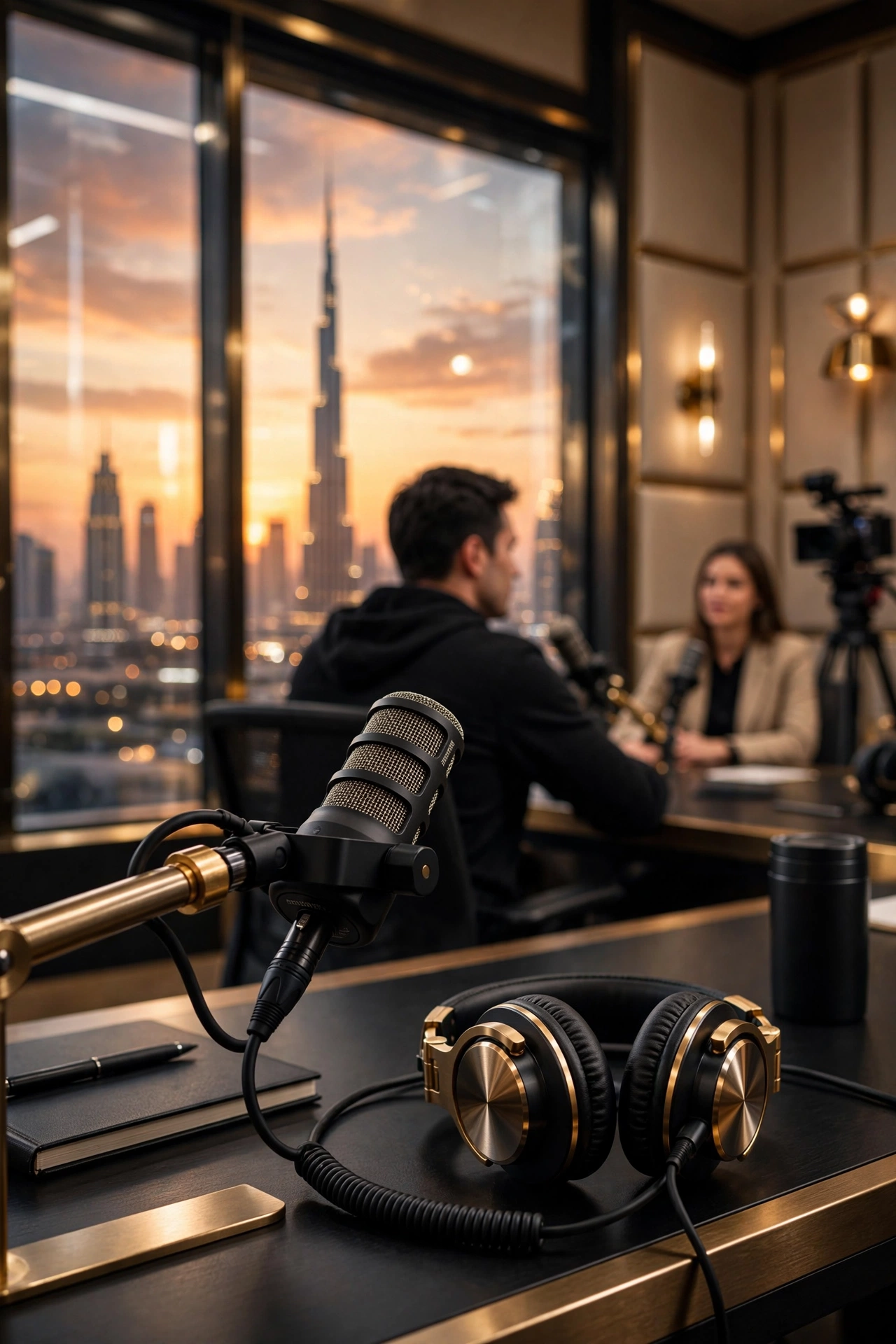
Not every Podcast Studio Dubai delivers the same result, even when two studios list nearly identical equipment on their websites. The difference usually comes down to how that equipment is used, how the room is treated acoustically, and how much support you get once the cameras start rolling. This article breaks down the factors that genuinely affect the finished episode, so you know what to look for beyond a list of gear on a booking page.
Acoustic Treatment Matters More Than the Microphone Brand
Creators often assume the microphone is the single biggest factor in audio quality, but room acoustics usually matter more. A high-end microphone in an untreated room still picks up echo, reflections, and background hum, while a mid-range microphone in a properly treated space can sound remarkably clean. A well-run studio podcast dubai setup invests heavily in acoustic panelling, bass traps and isolated booths precisely because this is where most of the perceived quality difference actually comes from.
This is also why home recordings, even with decent equipment, rarely match a studio result. It isn’t the gear gap people assume it is; it’s the room. Untreated spaces reflect sound in ways that are difficult to remove in post-production without making the voice sound processed or thin.
Ask any studio how they handle isolation between recording zones if they run more than one session at a time. Sound bleeding in from an adjacent room is a common, avoidable problem, and studios that separate recording spaces with proper soundproofing rather than thin partitions consistently deliver cleaner audio, even before a single edit is made.
Multi-Camera Video Adds a Layer Most People Underestimate
Audio quality gets most of the attention, but video has become just as important for a Podcast Studio in Dubai booking, since a large share of podcast consumption now happens on YouTube rather than audio-only platforms. Multi-camera setups with live switching let editors cut between angles naturally, the way a television interview would, rather than staying locked on a single static shot for forty minutes.
Lighting plays a bigger role here than most first-time bookers expect. Flat, harsh lighting makes even a well-shot video look amateur, while properly diffused, layered lighting gives footage a cinematic quality that holds attention longer. Studios that treat lighting as a core part of the setup, not an afterthought, consistently produce footage that performs better once it’s cut into clips for social platforms.
What Happens After Recording Determines How Far Content Travels
The recording session itself is only half the process. A few things separate strong post-production from adequate post-production:
- Sound mixing and mastering that balances multiple speakers evenly, rather than leaving one voice louder than another
- Color grading that gives video a consistent, professional look across the full episode
- Caption and subtitle work on short clips, since most social viewers watch without sound
- Platform-specific formatting, since a clip built for YouTube Shorts needs different framing than one built for LinkedIn
A studio that treats these as core services, rather than rushed add-ons, tends to produce content that performs noticeably better once it’s published, because the editing decisions were made with each platform’s audience in mind rather than applied uniformly across everything.
How to Judge a Studio Before You Book
Website photos and equipment lists only tell you so much. Ask to see recent finished episodes, not just raw studio photos, since the edited output is what actually shows you the quality level you’ll get. Pay attention to how consistent the audio sounds across different guests in the same episode, since that consistency is a good proxy for how well the studio manages levels during recording rather than trying to fix everything afterward.
It’s also worth asking how many people the technical team typically has on-site during a session. A single person managing cameras, audio and lighting simultaneously is more likely to miss something than a small dedicated crew, particularly during multi-guest recordings where more can go wrong at once.
Reviews and referrals from other creators tend to be more reliable than marketing copy for this reason. Someone who has recorded a full season at a particular studio podcast dubai facility can tell you whether the on-site experience actually matches what’s advertised, including things like how quickly editing turnaround happens and whether revision requests are handled without friction.
Conclusion
The gear list on a booking page is a starting point, not the full picture. What actually separates a strong Podcast Studio Dubai experience from an average one is acoustic treatment, thoughtful lighting, an attentive on-site crew and post-production that’s built around how content actually gets consumed today. If you’re comparing options, ask to see finished work from a studio podcast dubai has already produced before committing, since that will tell you more than any spec sheet.
FAQs
1. Does a more expensive studio always mean better quality?
Not necessarily. Price often reflects location, add-ons and studio size more than raw recording quality, so it’s worth reviewing finished episodes rather than assuming a higher rate guarantees better results.
2. How important is video if I only plan to publish audio?
Video is optional for audio-first shows, but many creators record video anyway since it opens up YouTube and short-form clips as additional distribution channels from the same session.
3. Can a studio fix bad audio in post-production?
To a point. Heavy noise or echo picked up during recording can be reduced but rarely fully removed, which is why acoustic treatment during the session matters more than post-production fixes.
4. How many guests can a typical studio accommodate?
Most studios offer both intimate one-on-one setups and larger multi-guest rooms, so capacity depends on which room and package you book rather than a single fixed limit.
5. What should I bring to my first studio session?
Beyond your talking points, bring a change of outfit if recording multiple episodes back-to-back, since the studio provides all recording equipment and technical support.