

Djibouti may be a small country in the Horn of Africa, but sports and traditional games are an important part of everyday life. From football matches on neighborhood fields to traditional board games passed down through generations, people enjoy activities that bring friends, families, and communities together.
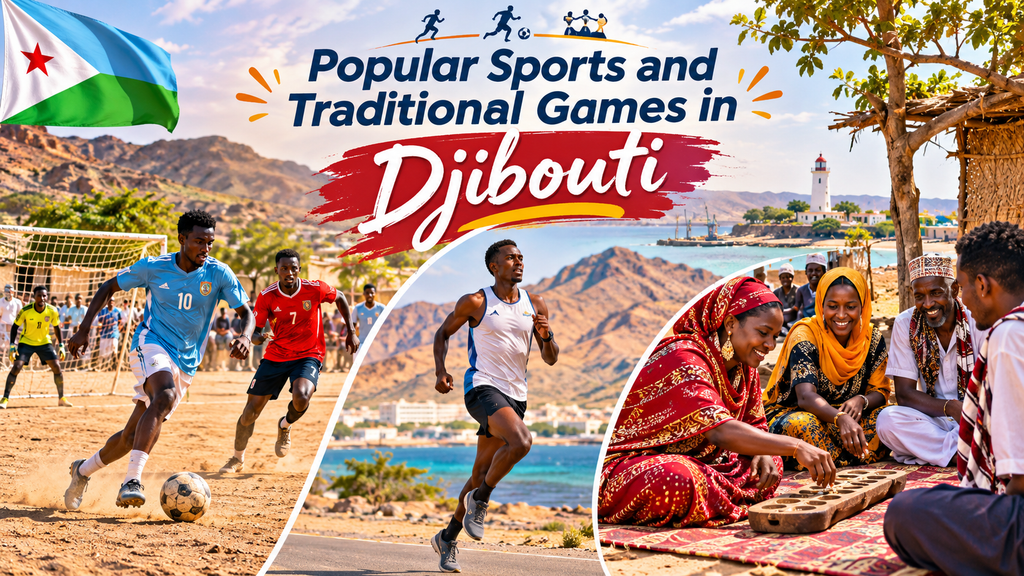
For travelers interested in local culture, exploring the popular sports and traditional games in Djibouti offers a different way to understand the country’s people and traditions.
Football: The Most Popular Sport in Djibouti
Football is one of the most widely enjoyed sports in Djibouti. Children and teenagers often play informal matches in open spaces, while local clubs compete in organized competitions.
The Djibouti national football team, known as the Red Sea Shoremen, represents the country in international competitions.
Football is more than entertainment. It gives young players opportunities to develop teamwork, discipline, and friendships.
Athletics and Long-Distance Running
Running holds a special place in Djibouti’s sporting history. The country has produced talented athletes who have competed internationally.
One of its most celebrated runners is Hussein Ahmed Salah, who won a bronze medal in the men’s marathon at the 1988 Seoul Olympics.
Another well-known athlete, Ayanleh Souleiman, has represented Djibouti in major middle-distance running competitions.
Local running events encourage young athletes to improve their fitness and develop their sporting abilities.
Basketball, Handball and Volleyball
Football and athletics are not the only sports enjoyed in Djibouti. Basketball, handball, and volleyball also attract participants, particularly among younger people.
These team sports are played in schools, sports clubs, and recreational spaces.
Handball and volleyball have organized competitive activities, while basketball provides another opportunity for young people to stay physically active.
Traditional Games of the Afar and Somali Communities
Traditional games are an important part of Djibouti’s cultural heritage, particularly among the Afar and Somali communities.
Some games involve strategy and counting, while others test concentration, coordination, or physical ability.
These activities have traditionally allowed older generations to share knowledge with children. UNESCO has supported initiatives to protect traditional Afar and Somali games, recognizing their cultural importance.
Travelers interested in exploring these traditions can learn more about local customs while visiting different communities.
Before traveling, international visitors can check the requirements and apply for a Djibouti Tourism eVisa online through a visa assistance service offering application guidance and document support.
Pétanque: A Popular Recreational Game
Pétanque is another familiar recreational activity in Djibouti. Introduced through French influence, this game involves throwing metal balls toward a smaller target ball.
Players compete by trying to position their balls closest to the target.
The game requires accuracy and patience rather than intense physical effort, making it suitable for different age groups.
Dominoes and Traditional Board Games
Dominoes and board games are popular social pastimes in Djibouti.
People sometimes gather in shaded outdoor spaces to play, talk, and relax with friends.
Traditional strategy games have also formed part of Afar and Somali cultural life. These games encourage logical thinking, memory, and friendly competition.
Why Sports Matter in Djiboutian Culture
Sports in Djibouti help people stay active, build friendships, and maintain community connections.
Modern competitions create opportunities for young athletes, while traditional games help preserve cultural knowledge.
For visitors, watching a local football match or learning about a traditional game can offer a memorable cultural experience.
Final Thoughts
The sporting culture of Djibouti combines modern competition with long-standing traditions. Football and running attract widespread interest, while pétanque, board games, and traditional community activities remain part of recreational life.
Exploring these activities allows travelers to discover another side of Djibouti, where sport is not simply about winning but also about friendship, cultural identity, and shared experiences.