

Spend a few days in Madagascar, and you will notice that entertainment here goes far beyond visiting beaches and national parks. Children play football on dusty grounds, neighbours gather around traditional board games, and rugby matches bring entire communities together.
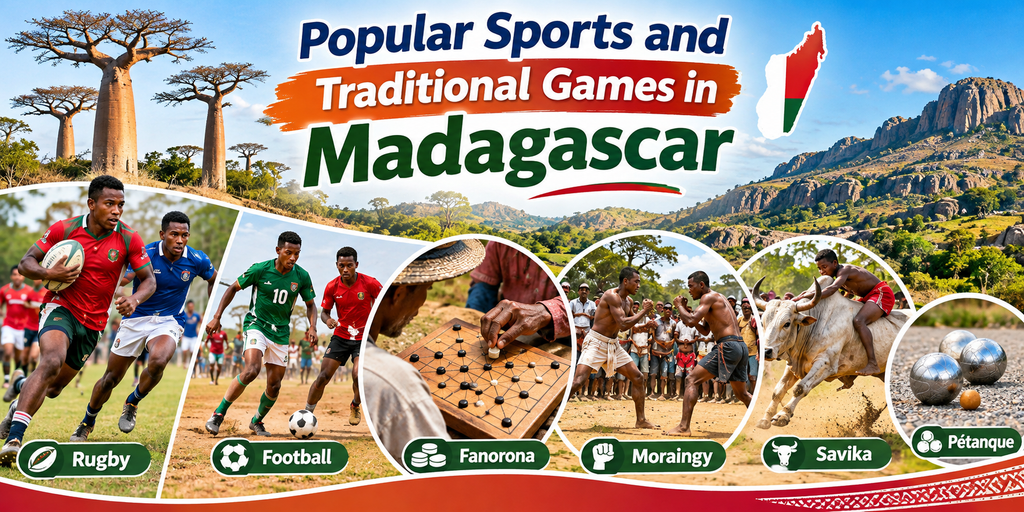
Some of these activities have been around for generations, while others arrived from overseas and gradually became part of Malagasy life.
Rugby: A Sport Locals Take Seriously
Rugby has a special place in Madagascar, particularly in the capital city of Antananarivo. You do not necessarily need to visit a large stadium to see people playing. Local grounds and neighbourhood spaces are often used for practice and friendly matches.
The national rugby team is popularly known as the Makis. For many Malagasy supporters, rugby is a source of national pride rather than simply a weekend activity.
Football and Its Growing Popularity
You will find football being played almost everywhere, from small villages to busy towns. Even when proper equipment is unavailable, children find creative ways to organise a match.
One of Madagascar’s biggest football moments came in 2019. The national team, known as the Barea, surprised many supporters by reaching the quarter-finals of the Africa Cup of Nations during its first appearance in the tournament.
Moraingy: A Traditional Fighting Sport
Along Madagascar’s coastal regions, an old form of martial arts called Moraingy continues to attract local interest.
Unlike modern boxing, Moraingy has its own cultural traditions. Fighters compete using their bare hands, relying on quick movements, physical strength and balance.
The competition is not always the only attraction. Music, drums and enthusiastic spectators can turn an ordinary gathering into a lively community occasion.
Experiencing Local Sports as a Visitor
You don’t have to be a sports enthusiast to enjoy these activities. Sometimes, sitting beside a local playing field or watching an afternoon board game can be just as interesting as visiting a famous tourist attraction.
Before booking your flights, take a moment to check your Madagascar eVisa eligibility. Sorting out your travel documents beforehand leaves you with fewer things to worry about during your holiday.
Fanorona: More Than Just a Board Game
Fanorona is a traditional Malagasy strategy game played by two people. The board consists of connecting lines, and players move small pieces across it.
What makes the game unusual is its method of capturing pieces. Players can capture their opponent’s pieces by moving towards them or pulling away from them.
The rules may seem unfamiliar at first, but watching experienced players makes the game easier to understand. It is a particularly interesting tradition to discover in Madagascar’s central highlands.
Savika: The Tradition of Zebu Wrestling
In places such as Ambositra and other parts of the Betsileo region, Savika remains a recognised cultural tradition.
During the event, participants try to hold onto a moving zebu. It demands considerable strength and courage.
Zebu cattle have long been associated with wealth, farming and traditional ceremonies in Madagascar. Savika reflects this historical connection, although the activity involves physical dangers and raises animal welfare concerns.
Pétanque: A Relaxed Afternoon Game
Not every popular sport in Madagascar requires physical strength. Pétanque is a good example.
Players throw metal balls towards a smaller wooden target. Whoever places their ball closest to the target gains an advantage.
Although French in origin, the game has developed a strong following in Madagascar, with Malagasy players achieving success in international competitions.
Katro and Other Recreational Activities
Katro is another traditional game that uses seeds, stones or similar small objects. Players move these pieces between holes, making calculated decisions throughout the game.
Basketball, volleyball and athletics are also enjoyed, particularly among younger generations.
A Different Side of Madagascar
Madagascar’s wildlife deserves its reputation, but there is much more to discover. Watching a rugby match, learning the basics of Fanorona or observing a traditional community gathering can make your trip feel more personal.
These everyday experiences often become the memories travellers carry home long after their holiday ends.