

Not all studio gear is created equal, and the differences show up the moment you compare two finished episodes side by side. If you’re planning to record a podcast in Dubai, understanding what equipment separates a professional-sounding show from an amateur one will help you ask the right questions before you book. This isn’t about chasing the newest gear — it’s about knowing which specs genuinely affect quality.
Microphones: Where Most of the Quality Difference Comes From
Audio quality matters more than video quality for most podcast audiences, which makes the microphone the single most important piece of equipment in the room. Broadcast-grade microphones — typically dynamic mics built for spoken word — reject background noise far better than the condenser mics found in consumer USB setups. That rejection matters enormously in a shared building where hallway noise or air conditioning hum can otherwise creep into a recording.
Ask any Dubai Podcast Studio you’re considering what specific microphone model they use and whether each speaker gets an individual mic and channel. Shared mics might look fine on camera, but almost always produce uneven volume levels between speakers, which becomes a tedious fix in post-production rather than something solved cleanly during the session itself.
Cameras and the Case for 4K Recording
Video specs get less attention than audio in most podcast discussions, but they matter if you plan to publish clips on YouTube or Instagram. 4K recording gives editors room to crop in on a speaker’s face or reframe for vertical formats without visibly losing resolution, which is essential once your footage gets repurposed into six or seven short clips per episode.
A few practical things to check before booking:
- Whether the studio offers a genuine multi-camera setup with at least two synchronized angles, not just one static wide shot
- Whether cameras auto-switch between speakers or require manual editing afterward
- Whether lighting is fixed and pre-calibrated, since inconsistent lighting between angles is a common giveaway of a rushed setup
These details rarely show up on a pricing page, so it’s worth asking directly rather than assuming.
Acoustic Treatment: The Invisible Factor
Acoustic treatment doesn’t photograph well, which is probably why it gets less attention than cameras and lighting in studio marketing. But it’s arguably more important than either. A room with hard, reflective surfaces produces an echo that no amount of post-production EQ can fully remove. Panels, bass traps, and ceiling treatment absorb those reflections before they ever reach the microphone.
If you’re touring a Dubai Podcast Studio in person, do a simple test: speak normally in the room and listen for how quickly your voice trails off. In a well-treated room, it should sound almost dry, with minimal natural echo trailing your words.
Post-Production Tools That Affect Turnaround
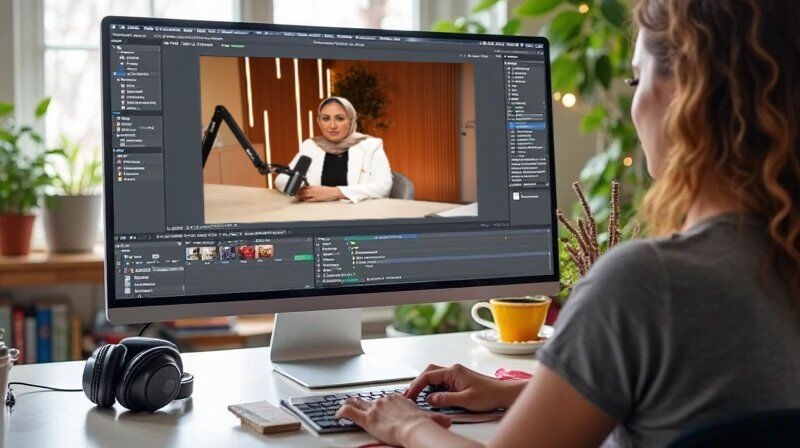
Equipment inside the room is only half the picture. What a studio uses for post-production affects both quality and how quickly you get your files back. Studios using professional editing software with multi-track audio syncing can isolate and clean individual voices far more precisely than those relying on basic consumer editing tools.
Ask what your delivery package actually includes: colour-corrected video, noise-reduced audio, and properly leveled speaker volumes should be standard, not an upsell. If a studio can’t clearly describe its post-production workflow, that’s often a sign the process is more manual and slower than advertised.
Bringing the Pieces Together
Choosing where to record a podcast in Dubai comes down to more than a nice-looking room. Microphones, camera setup, acoustic treatment, and post-production tools each play a distinct role in how professional your final episode sounds. When you’re comparing one Dubai Podcast Studio against another, ask about these four areas specifically, rather than judging by studio photos alone. A short in-person visit before booking a full series will tell you more than any pricing page ever could.
Frequently Asked Questions
1. Does the microphone brand really matter that much?
Brand doesn’t matter as much as type; dynamic broadcast mics usually beat consumer-level condenser mics in non-treated and partially treated spaces, which describes most rental studios.
2. Is 4K recording necessary if I only publish audio episodes?
No, if it’s strictly audio, video resolution is meaningless. It only becomes important if you intend to make video episodes or short clips for social media.
3. How can I tell if a room has proper acoustic treatment?
Expect at least two walls and the ceiling to have panels, and then test the reverberation by clapping or speaking to see how long it lasts after that.
4. What’s included in a typical post-production package?
Basic audio leveling, noise reduction, and video color correction would normally be part of the service offered in any production studio. Special editing, such as custom graphics, would be additional.
5. Should I ask to see a sample episode before booking?
Absolutely yes. There is no reason why a studio should not be willing to give you an example of an episode produced recently for evaluation purposes.