

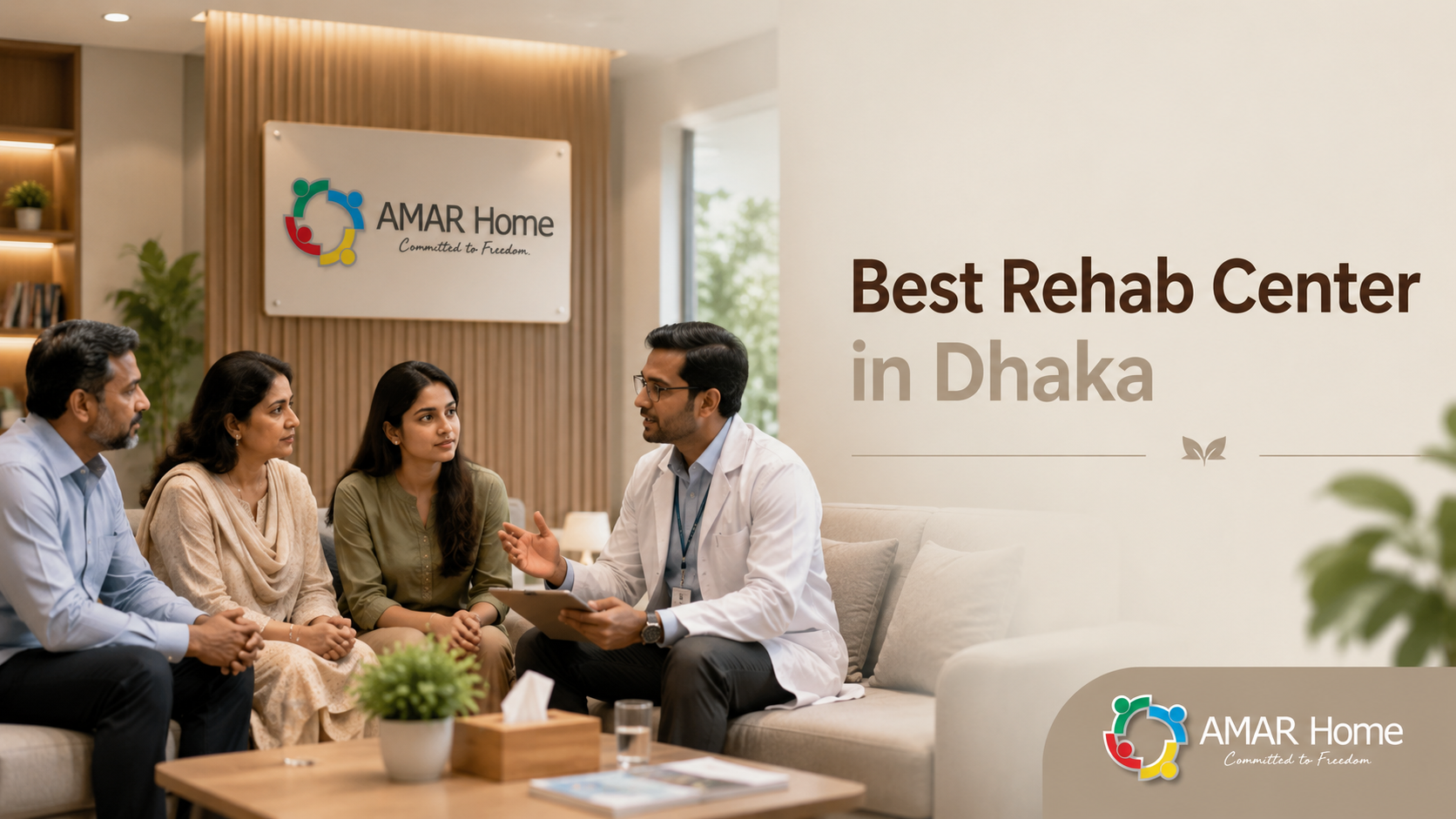
Choosing a rehab center in Savar is an important decision for any family seeking professional addiction treatment. Before admission, families should check licensing, medical supervision, treatment programs, staff qualifications, safety, therapy, family support, and aftercare. AMAR Home can also be considered when comparing rehabilitation options in the Dhaka area.
Why Families Should Research Before Choosing a Rehab Center
Addiction treatment is a serious commitment. The quality of care, treatment environment, and professional support can influence a patient’s recovery experience.
Families should avoid making a decision based only on advertisements or recommendations from others. Every patient has different needs, and the most appropriate treatment facility should be selected after considering the individual’s physical health, substance-use history, psychological needs, and recovery goals.
A careful evaluation can help families identify a facility that provides structured, professional, and patient-centered care.
1. Check Licensing and Professional Standards
The first thing families should check is whether the rehabilitation facility operates legally and follows applicable regulations.
A legitimate treatment center should be transparent about its licensing, registration, professional standards, and treatment policies.
Families can ask:
- Is the facility properly licensed?
- What regulatory requirements does it follow?
- Are treatment policies clearly explained?
- Does the facility maintain appropriate patient records?
- Are safety and emergency procedures established?
Licensing does not guarantee a particular treatment outcome, but it can provide an important indication that a facility operates within an established regulatory framework.
2. Evaluate the Qualifications of the Treatment Team
Addiction treatment may involve medical, psychological, behavioral, and social challenges.
For this reason, families should understand who will be responsible for patient care.
A professional rehabilitation team may include doctors, nurses, counselors, psychologists, therapists, and trained support staff, depending on the facility and the patient’s needs.
When evaluating a rehab center in Savar, ask about the qualifications, experience, and responsibilities of the professionals involved in treatment.
The facility should be able to explain who handles medical issues, counseling, therapy, medication management, and emergency situations.
3. Understand the Treatment Program
Not every rehabilitation center follows the same treatment model.
Families should ask for a clear explanation of the treatment process before admission.
A comprehensive program may include:
- Initial assessment
- Medical evaluation
- Detoxification when clinically appropriate
- Individual counseling
- Group therapy
- Behavioral therapy
- Family counseling
- Recovery education
- Relapse-prevention planning
- Aftercare support
The treatment plan should be appropriate to the patient’s specific circumstances rather than applying an identical program to everyone.
Why Individualized Treatment Matters
Addiction can affect people differently. The same substance may create different physical, psychological, and social challenges for different individuals.
An individualized treatment plan allows professionals to consider factors such as substance-use history, health conditions, previous treatment, family environment, and recovery goals.
4. Ask About Medical Detoxification
Detoxification may be necessary for some people before they begin the next stages of addiction treatment.
When a person has developed physical dependence on a substance, stopping suddenly can cause withdrawal symptoms. Depending on the substance and severity of dependence, withdrawal may require medical attention.
Families should therefore ask:
- Is detoxification medically supervised?
- Who monitors patients during withdrawal?
- What happens if complications occur?
- Is medical support available when necessary?
- How does detox connect with ongoing rehabilitation?
It is important to remember that detox is not the same as complete addiction treatment. Detox addresses the physical process of stopping substance use, while rehabilitation also focuses on behavioral and psychological recovery.
5. Examine the Safety and Residential Environment
The physical environment can play an important role in residential rehabilitation.
Families should look for a facility that provides cleanliness, security, privacy, supervision, and a structured daily routine.
If possible, families should visit the facility before admission.
During a visit, consider:
- Cleanliness of living areas
- Sleeping arrangements
- Common areas
- Security procedures
- Patient supervision
- Hygiene standards
- Meal arrangements
- Rules and daily schedules
A supportive environment can help patients focus on recovery while reducing exposure to some of the distractions and triggers associated with everyday life.
6. Learn About Counseling and Therapy
Addiction is not simply a physical dependence. Psychological, emotional, and behavioral factors can contribute to continued substance use.
Therefore, therapy should be an important consideration when choosing a rehabilitation facility.
Individual Counseling
Individual counseling gives patients a private space to discuss personal experiences, emotional challenges, triggers, and recovery goals.
Group Therapy
Group therapy can encourage communication and peer support. Patients may learn from others who are also working through addiction recovery.
Behavioral Therapy
Behavioral approaches can help patients identify unhealthy patterns and develop healthier coping strategies.
Families should ask which evidence-informed therapeutic approaches the facility uses and how treatment professionals decide which methods are appropriate.
7. Check How the Facility Handles Family Involvement
Addiction affects families as well as individuals.
Parents, spouses, siblings, and other relatives may experience emotional stress and uncertainty during treatment. Family involvement can therefore be useful when it is appropriate and consistent with the patient’s treatment plan.
A quality rehabilitation program may provide:
- Family education
- Family counseling
- Communication guidance
- Recovery education
- Support for healthy boundaries
Families should ask about communication rules and how often they can receive appropriate updates about their loved one’s progress.
8. Ask About Relapse Prevention
Completing rehabilitation does not automatically eliminate the risk of relapse.
Patients may face stress, cravings, social pressure, or other triggers after returning to their normal environment.
A strong treatment program should teach patients how to recognize and manage these challenges.
Relapse-prevention education may focus on:
- Identifying personal triggers
- Managing cravings
- Developing healthy routines
- Avoiding high-risk situations
- Building supportive relationships
- Managing stress
- Seeking professional support when necessary
When comparing a rehab center in Savar, families should ask how relapse prevention is incorporated into the treatment plan.
9. Understand the Aftercare Program
Aftercare is an important part of long-term recovery.
Patients may require continuing support after completing residential rehabilitation. Depending on their needs, aftercare can include counseling, follow-up appointments, support groups, family involvement, and recovery planning.
Families should ask:
What happens after the patient completes the main treatment program?
A clear answer to this question can help families understand whether the facility is focused only on short-term stabilization or also supports longer-term recovery.
10. Review the Facility’s Communication and Treatment Policies
Before admission, families should understand the facility’s rules and policies.
These may cover:
- Visiting arrangements
- Phone communication
- Personal belongings
- Medication policies
- Daily schedules
- Privacy
- Emergency communication
- Family involvement
- Discharge procedures
Clear policies can reduce misunderstandings and help patients and families understand what to expect.
How AMAR Home Can Be Considered in the Selection Process
AMAR Home is a rehabilitation facility in Dhaka that provides structured addiction treatment and recovery support.
Its treatment approach includes services such as medically supervised detoxification, counseling, behavioral therapy, residential treatment, and aftercare support.
Families searching for treatment options around Savar can consider AMAR Home as one facility to evaluate based on their loved one’s individual needs.
However, families should always discuss the patient’s specific circumstances with qualified treatment professionals before deciding whether a particular rehabilitation program is appropriate.
Important Questions to Ask Before Admission
Before making a final decision, families can prepare a list of questions.
Medical Care
- Who provides medical supervision?
- How are withdrawal symptoms managed?
- What happens during a medical emergency?
Treatment
- How is the treatment plan developed?
- Which therapies are available?
- How is patient progress evaluated?
Residential Care
- What is the daily routine?
- What safety measures are in place?
- How are patient privacy and confidentiality handled?
Family Support
- How can families communicate with patients?
- Is family counseling available?
- How are families involved in recovery?
Continuing Care
- Is relapse-prevention education provided?
- What aftercare services are available?
- How does the facility support patients after discharge?
Getting clear answers can make the admission process more transparent and less stressful.
Red Flags Families Should Watch For
Families should be cautious when a facility makes unrealistic promises.
Potential warning signs include:
- Guaranteed permanent recovery
- Unclear staff qualifications
- Lack of transparency about treatment methods
- Unclear licensing information
- No explanation of emergency procedures
- No individualized treatment planning
- No clear aftercare strategy
Responsible rehabilitation providers should communicate honestly about addiction recovery. Recovery can be challenging, and no ethical facility should promise a guaranteed outcome.
Choosing the Right Facility for Your Loved One
Selecting a rehabilitation center is ultimately about finding appropriate care for the individual.
Families should consider professional qualifications, medical supervision, treatment quality, patient safety, therapy, family involvement, and aftercare.
Location is also relevant. A facility that is reasonably accessible can make family communication and follow-up support easier. However, treatment quality and suitability should remain the primary considerations.
The best decision is one based on careful research and professional assessment rather than urgency or advertising claims.
Conclusion
Choosing a rehab center in Savar requires careful attention to licensing, medical care, treatment quality, safety, therapy, family involvement, and aftercare. AMAR Home is one option families can evaluate when exploring structured addiction treatment in the Dhaka area. The right facility should match the patient’s individual recovery needs and provide professional, compassionate support.