

Imagine stepping off a felucca sailboat into a village where the houses are painted in vibrant shades of turquoise, pink, and sunny yellow, adorned with intricate geometric patterns. The air carries the sweet scent of hibiscus tea and the rhythmic, hypnotic beat of drums. Welcome to Nubia, an ancient land along the Nile River that stretches across southern Egypt and northern Sudan.
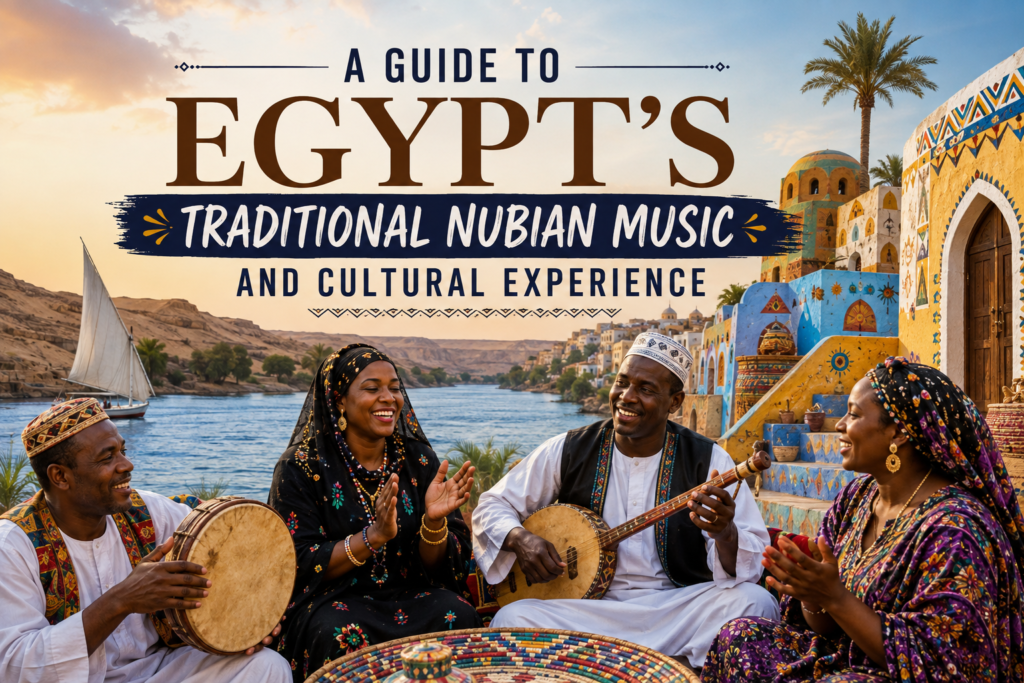
While Egypt is world-famous for its towering pyramids and grand pharaonic temples, no journey to this magical country is truly complete without experiencing the soul-stirring heartbeat of Nubian culture and music.
Who Are the Nubians and Where Can You Find Them?
The Nubians are one of Africa’s oldest indigenous ethnic groups, with a rich history that dates back thousands of years—often trading, warring, and intermarrying with ancient Egyptian pharaohs.
Today, most Nubians in Egypt live in Aswan and surrounding villages, such as Gharb Soheil (West Soheil). Following the construction of the Aswan High Dam in the 1960s, which flooded their ancestral homelands, the Nubian community was resettled, but they bravely carried their vibrant heritage, language, and traditions with them. Visiting these colorful villages feels like stepping into a living, breathing cultural museum.
The Heartbeat of Nubia: Traditional Instruments and Sounds
Nubian music is entirely distinct from mainstream Arabic or Middle Eastern music. It is an uplifting, percussion-heavy genre that tells stories of the Nile, longing for home, weddings, and community life. If you listen closely, you will notice distinct African rhythms combined with melodic storytelling.
Key instruments that define the Nubian sound include:
-
The Def (Frame Drum): The backbone of Nubian rhythm. Played with bare hands, the deep, resonant thud of the def sets the tempo for every celebration.
-
The Oud (Lute): A short-necked, fretless stringed instrument that adds a melancholy, poetic layer to the melodies.
-
The Kumbi or Traditional Lyre: A plucked string instrument that creates a hypnotic, flowing accompaniment to vocal harmonies.
-
Call-and-Response Vocals: Songs are traditionally led by a main vocalist, with a chorus of villagers joining in to create an inclusive, communal atmosphere.
Experience the Magic: What to Expect on a Cultural Visit
When you visit a traditional Nubian village in Aswan, you aren’t just observing from afar—you are welcomed in as an honored guest. Here is what you can look forward to:
1. Warm Hospitality and Hibiscus Tea (Karkadeh)
Nubians are renowned globally for their incredible warmth and friendliness. You will likely be invited into a traditional mud-brick home to sip chilled or warm hibiscus tea, chat with the locals, and perhaps even meet a rescued baby crocodile kept as a traditional household symbol of good luck.
2. Traditional Music and Dance Circles
As the sun sets over the Nile, the gathering turns into a musical celebration. Local musicians pull out their drums, and before you know it, you will be caught up in the contagious rhythm. Visitors are always encouraged to join in the traditional shoulder-shaking dance, clapping along to the beat and laughing with the community.
3. Henna Art and Local Crafts
Local women showcase their artistic talents by painting delicate, temporary henna tattoos on visitors’ hands. You can also shop for handmade crafts, including colorful woven baskets, beaded jewelry, and spices that reflect centuries-old artistry.
Planning Your Journey and Getting Ready for Egypt
Experiencing the living heartbeat of Nubian music firsthand is a travel memory that will stay with you forever. However, before you can pack your bags and listen to the rhythms of the Nile, you need to ensure your travel paperwork is in order.
Navigating entry requirements can sometimes feel overwhelming. If you want to make your journey smooth and stress-free, it helps to rely on professional support. By utilizing trusted Egypt visa requirements services, you gain access to reliable travel visa assistance, 24/7 round-the-clock support, and experienced visa consultants who make the visa application process efficient so you can focus entirely on the adventure ahead.
Why Choose Our Recommended Travel Visa Services?
If you are wondering how to get your travel paperwork sorted quickly and securely, here is why travelers trust expert assistance:
-
Reliable Travel Visa Services: Our global approach has assisted numerous travelers in obtaining their visa smoothly.
-
Round-the-Clock Assistance: Reach out to us 24/7, and our experts will respond within 72 hours to help you out.
-
Experienced Visa Consultants: Receive expert guidance to ensure the acceptance of your application on the first try.
-
Efficient Visa Application Process: Apply for your visa in minutes with our simplified online form.
Final Tips for Your Nubian Cultural Adventure
-
Respect Local Customs: Nubian villages are close-knit, conservative communities. Dress modestly when walking through the villages to show respect for local traditions.
-
Support Local Artisans: Purchase your souvenirs directly from local families and artisans to directly support the community’s economy.
-
Embrace the Rhythm: Don’t be shy! Let loose, dance, and immerse yourself fully in the music.
Nubian music is more than just sound—it is the living soul of the Nile. Are you ready to add the vibrant rhythms of Nubia to your next travel bucket list?