

When most people picture Myanmar, glittering golden pagodas like Shwedagon usually come to mind first. Yet, tucked away in royal capitals and quiet countryside towns are architectural treasures crafted entirely from teak wood. Myanmar’s historic wooden monasteries—known locally as kyaund—offer a peaceful, deeply atmospheric look into the country’s rich spiritual and artistic heritage.
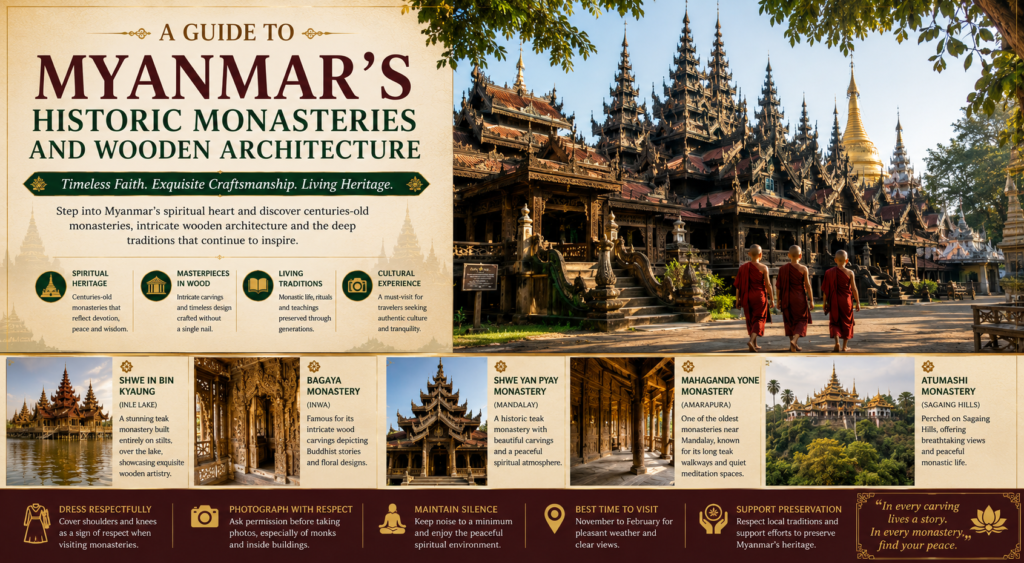
Unlike stone monuments that endure through sheer mass, these wooden marvels survive through master craftsmanship, intricate carpentry, and a deep reverence for tradition. If you are planning a journey to explore these cultural wonders, here is a guide to understanding and discovering Myanmar’s magnificent wooden architecture.
The Legacy of Teak: Why Wood Matters in Burmese Architecture
Teak is the king of timbers in Southeast Asia. Naturally oily, durable, and resistant to termites and rotting, Burmese teak became the premier building material for royal palaces and major monasteries during the Konbaung dynasty and earlier eras.
Building a monastery out of wood was considered an act of immense religious merit. Wealthy royals, nobles, and devout commoners would commission master carpenters to carve elaborate panels, soaring roofs, and sturdy pillars. Without using modern nails, these builders relied on traditional mortise-and-tenon joints, allowing the massive structures to withstand centuries of tropical monsoons and seasonal earthquakes. Travelers looking to arrange their paperwork easily can check out a Myanmar tourist visa before setting out on their cultural adventure.
Architectural Marvels You Cannot Miss
1. Shwenandaw Monastery (The Golden Palace Monastery), Mandalay
Perhaps the most famous wooden monastery in Myanmar, Shwenandaw is the last remaining major structure of the original Mandalay Royal Palace. Originally part of King Mindon’s royal residence, the building was dismantled and reassembled at its current site in 1878 by his son, King Thibaw.
-
What to look for: Every square inch of the exterior is covered in exquisite wood carvings depicting Buddhist Jataka tales, mythological creatures, and floral motifs. Once entirely covered in gold leaf (traces of which can still be seen inside), it stands as a testament to peak 19th-century Burmese craftsmanship.
2. Bagaya Monastery, Inwa (Ava)
Located just outside Mandalay in the ancient capital of Inwa, Bagaya Monastery dates back to 1834. Supported by over 260 massive teak pillars—some measuring nearly sixty feet high—this grand monastery feels like stepping back in time.
-
What to look for: The sheer scale of the massive timber pillars creates a cool, cathedral-like serenity inside. The exterior features delicate, multi-tiered roofs and fine relief carvings that remain remarkably well-preserved.
3. Salay’s Yoke Sone Monastery, Magway Region
Further south along the Ayeyarwady River lies Salay, a quiet town renowned for colonial-era buildings and ancient monasteries. Yoke Sone Kyaung, built in 1882, is the oldest surviving wooden monastery in the area.
-
What to look for: It functions almost as a living museum, housing ancient Buddha images, traditional lacquerware, and manuscript chests. The exterior wood carvings are some of the most dynamic and expressive in the country, capturing daily life and folklore of the late 19th century.
Tips for Visiting Historic Monasteries Responsibly
Exploring these sacred wooden structures requires mindfulness and respect. Because these are active places of worship where monks still live and study, keep the following tips in mind:
-
Dress Modestly: Ensure your shoulders and knees are covered. You will also need to remove your shoes and socks before stepping onto the wooden grounds.
-
Protect the Wood: Avoid leaning heavily on ancient carvings or touching fragile lacquered surfaces. Natural oils from human hands can accelerate the degradation of centuries-old wood.
-
Support Local Communities: Hire local guides when available, as they can share fascinating local legends and details about the carpentry techniques that print guidebooks often miss.
Planning Your Journey to Myanmar
Experiencing the quiet dignity of Myanmar’s wooden monasteries is a transformative travel experience. If you are inspired to witness these architectural wonders firsthand, ensuring your travel documentation is in order is the first step of your adventure.
Why Choose Us for Your Travel Needs?
-
Reliable Travel Visa Services: Our global approach has assisted numerous travelers in obtaining their Visa smoothly and securely.
-
Round-the-Clock Assistance: Reach out to us 24/7, and our dedicated experts will respond within 72 hours to help with your queries.
-
Experienced Visa Consultants: Receive expert guidance every step of the way to ensure the correct preparation and acceptance of your application.
-
Efficient Visa Application Process: Apply for your tourist visa in minutes using our simplified online form.
Ready to begin your journey? Start your application today at e-Tourist Visa Myanmar and get closer to exploring the timeless wooden heritage of Myanmar.