

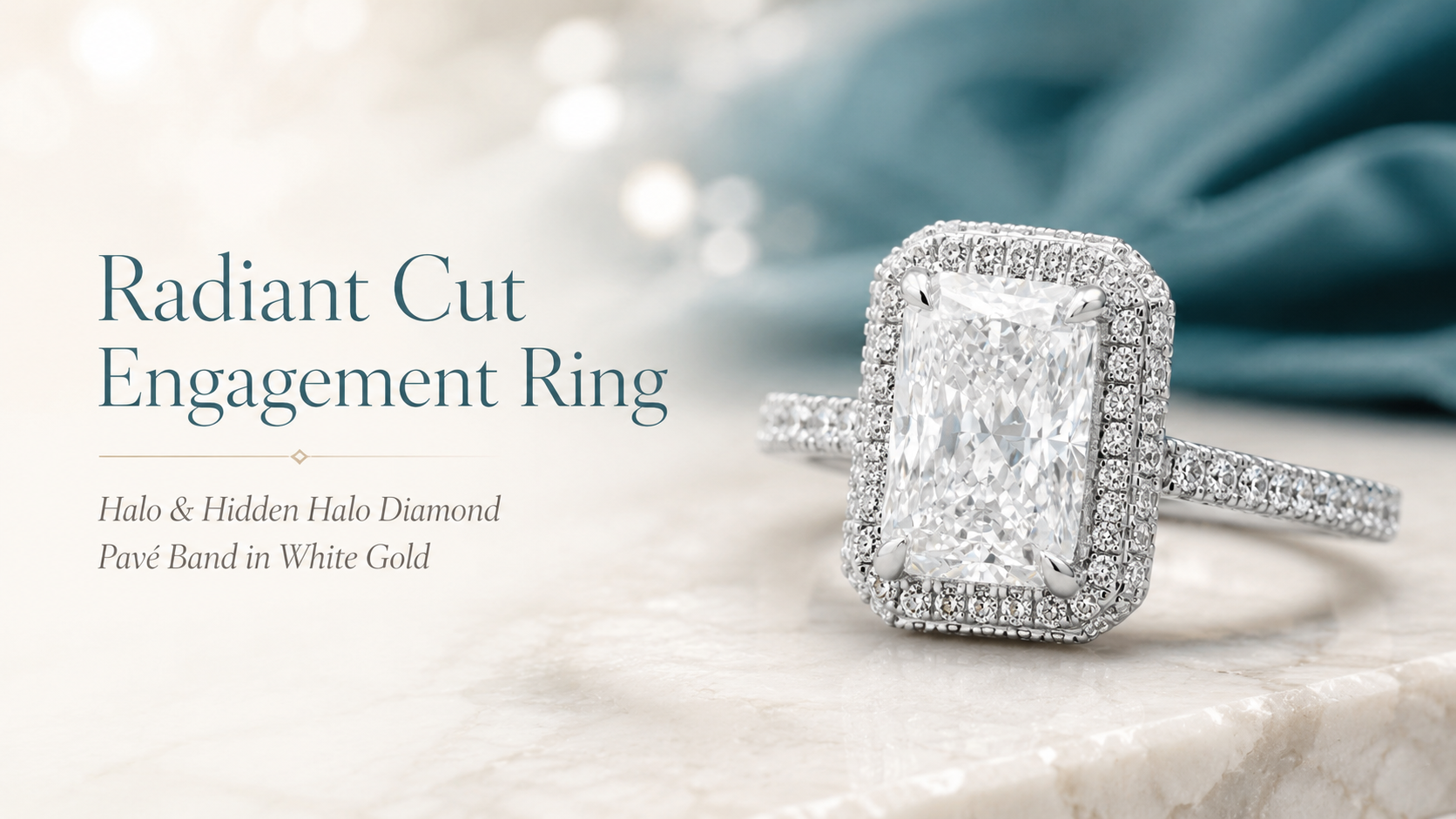
A proposal does not need an enormous budget to feel personal and carefully planned. The ring you choose should reflect your partner’s taste, your relationship, and the kind of future you hope to build together. With a budget of $4,000, shoppers have plenty of room to consider different diamond shapes, ring settings, metals, and design details. Lab-grown diamonds can make that budget go further, allowing you to focus on the details that matter most rather than spending the majority of your money on the stone alone.
If you are comparing lab-grown diamond ring options under $4,000, start by thinking about the complete ring rather than focusing only on carat weight. A well-chosen center stone, a suitable setting, and a comfortable band can create a ring that feels carefully selected without pushing your budget too far.
Why Consider a Lab-Grown Diamond Ring?
Lab-grown diamonds have the same basic crystal structure and chemical composition as mined diamonds. They are created in controlled laboratory environments using advanced processes that replicate the conditions involved in diamond formation.
For engagement-ring shoppers, one practical advantage is price. Lab-grown diamonds can provide more flexibility within a fixed budget, which may allow you to consider a larger center stone, a more detailed setting, or a custom design.
That flexibility is especially useful when shopping for a proposal ring under $4,000. Instead of treating the budget as a limitation, you can divide it across the features that are most important to your partner.
How to Plan a $4,000 Ring Budget
Before choosing a diamond, decide how you want to distribute your spending. There is no single correct formula, but having a rough plan can prevent you from spending too much on one feature.
For example, you may want to reserve most of the budget for the center diamond while keeping the setting simple. Another shopper may prefer a smaller center stone with a detailed halo, pavé band, or custom setting.
Think about these areas:
- Center diamond
- Ring metal
- Setting and design
- Side stones or accent diamonds
- Customization
- Certification
- Ring sizing and finishing
This approach can make it easier to compare lab grown diamond rings under $4000 without becoming focused on one specification.
Choosing the Right Diamond Shape
Diamond shape has a major effect on how a ring looks on the hand. It also influences how large the stone may appear from above.
Round Cut
Round diamonds remain a popular choice for engagement rings because their symmetrical shape works with many settings. A round center stone can be paired with a solitaire, halo, pavé, or cathedral setting.
Oval Cut
Oval diamonds offer an elongated outline that can create a longer appearance on the finger. They can work particularly well in solitaire and halo settings.
Cushion Cut
Cushion diamonds have softened corners and a square or rectangular outline. They are a good choice for someone who likes a slightly softer shape without choosing a round stone.
Emerald Cut
Emerald-cut diamonds feature a rectangular outline and step-cut facets. Their appearance is different from brilliant-cut diamonds, making them suitable for someone who prefers clean lines and a less traditional look.
Pear and Marquise
Pear and marquise shapes can create an elongated appearance and offer an alternative to the most common engagement-ring silhouettes. Their pointed ends also give designers more options for distinctive settings.
Pay Attention to Diamond Quality
Carat weight is only one part of choosing a diamond. The traditional 4Cs—cut, color, clarity, and carat—can help you compare stones.
Cut: For many shoppers, cut deserves particular attention because it influences how effectively a diamond handles light.
Color: Lab-grown diamonds are available across a broad range of color grades. Depending on the setting and metal, you may be comfortable choosing a lower color grade rather than allocating too much of your budget to a higher grade.
Clarity: A diamond does not necessarily need the highest clarity grade to look clean to the unaided eye. Reviewing the grading information and examining the stone carefully can help you decide where your money is best spent.
Carat: Carat refers to weight, not visual dimensions. Two diamonds with the same carat weight can have different appearances depending on their proportions and shape.
The goal is to find a combination that looks right to you rather than choosing the highest possible number in every category.
Explore Collection of Lab-Grown Diamond Rings Under $4,000
If you want to compare different styles before deciding, explore collection of lab-grown diamond rings under $4,000 to see how different shapes, settings, and metal choices work within the same spending range.
A collection-based approach can also help you identify the design details you prefer. You may discover that a simple solitaire suits your partner better than a larger halo setting, or that an east-west arrangement offers the distinctive look you were hoping to find.
Consider Custom-Made Designs
Not every meaningful ring has to come directly from a standard catalog. Customization can be useful when you have a particular idea in mind.
For shoppers searching for affordable custom-made diamond rings under $4,000, the key is to establish priorities early. Decide which features must be included and which details can be adjusted if the design begins to exceed the budget.
You might customize:
- Diamond shape
- Ring metal
- Band width
- Prong style
- Accent stones
- Halo size
- Setting height
- Engraving
A custom ring can also be a good choice if your partner has mentioned a particular design in passing. Small details can turn a familiar ring style into something that feels connected to your relationship.
Hidden Halo Rings Under $4,000
A hidden halo is positioned beneath the center stone rather than forming the main visible halo around it. This placement gives the setting an additional design detail while keeping the top view relatively clean.
For those wondering where to find elegant hidden halo rings under $4,000?, look for collections that offer lab-grown center stones and customizable settings. Compare the setting height, halo placement, metal options, and center-stone shape before making a decision.
A hidden halo can work with several diamond shapes, including round, oval, cushion, and pear designs. The right combination depends largely on the proportions of the center stone and the style of the band.
Selecting the Ring Metal
The metal can change the overall appearance of an engagement ring and should be considered alongside the diamond.
White gold: A popular choice for shoppers who prefer a cool-toned appearance.
Yellow gold: Provides a warmer contrast against a diamond and works well with many traditional and contemporary ring designs.
Rose gold: Offers a warmer pink-toned appearance and can create a different look when paired with a lab-grown diamond.
Platinum: Known for its durability and naturally white appearance, although it may require a larger portion of the budget than some gold options.
Consider what jewelry your partner already wears. If they usually wear yellow-gold earrings or bracelets, a yellow-gold engagement ring may feel more consistent with their existing collection.
Finding the Best Engagement Rings Under $4,000
The best engagement rings under $4000 are not necessarily the ones with the largest diamond. A better choice is one that fits your budget while matching the recipient’s style and everyday needs.
For someone who prefers simple jewelry, a solitaire may be the right answer. Someone who enjoys detailed designs may prefer pavé accents or a hidden halo. If your partner likes unusual jewelry, an east-west setting or an unconventional diamond shape could be worth considering.
Think about the person who will wear the ring every day. Comfort, practicality, and personal taste should carry as much weight as the specifications on the diamond report.
Look Beyond Carat Weight
One of the easiest mistakes when shopping for an engagement ring is treating carat size as the main measure of value.
A larger diamond is not automatically the better choice. Proportions, shape, cut quality, setting design, and overall balance all contribute to the finished ring.
With lab-grown diamonds, a $4,000 budget can give you the opportunity to compare several combinations instead of immediately choosing the largest stone available. You might find that a slightly smaller diamond in a beautifully designed setting looks more appropriate for your partner.
Buy With Certification and Details in Mind
When comparing lab-grown diamonds, review the grading report and the information supplied with the stone. Certification can provide useful details about the diamond’s characteristics and help you compare different options.
Also check practical details such as ring sizing, resizing policies, warranties, return periods, and customization timelines. These details may not be as exciting as choosing the diamond, but they can make the purchasing process much easier.
Why the Design Matters More Than the Price Tag
An engagement ring represents a personal decision, so the amount you spend does not determine how meaningful the proposal will be.
A ring can become meaningful because of the thought behind the design. Perhaps the diamond shape resembles a piece of jewelry your partner once admired. Maybe the band includes a discreet engraving. You might choose a setting inspired by a place you visited together.
These decisions can make a $4,000 ring feel much more personal than a far more expensive ring selected without considering the person who will wear it.
Choosing a Ring From Antiquecut
For shoppers comparing different lab-grown designs, Antiquecut offers ring styles that can help you explore different combinations of diamond shapes, settings, and finishes. When shopping around a specific budget, compare the complete ring rather than judging individual specifications in isolation.
Take time to look at the center stone, setting, band, and overall proportions together. The right combination can give you a ring that feels personal while keeping your spending within the amount you planned.
Final Thoughts
A $4,000 proposal budget can provide plenty of room to create a thoughtful engagement ring. Lab-grown diamonds make it possible to explore different shapes and designs while giving you more flexibility with how the budget is allocated.
Start with your partner’s style, then compare the diamond shape, cut, color, clarity, setting, and metal. Consider whether customization or a hidden halo would make the ring more personal. Most importantly, choose a ring because it feels right for the person you are proposing to—not simply because it has the biggest center stone.
The strongest choice among lab-grown diamond ring options under $4,000 is the one that brings together your budget, your partner’s preferences, and the meaning you want the proposal to carry.