

Across West Africa, few cultural rituals capture the imagination quite like the sacred masquerades of Burkina Faso. Far beyond simple theatrical displays or folk dances, masked performances in this Sahelian nation are living spiritual ceremonies. For centuries, diverse communities have used sacred masks to commune with ancestors, honor nature spirits, bless harvests, and reinforce moral teachings.
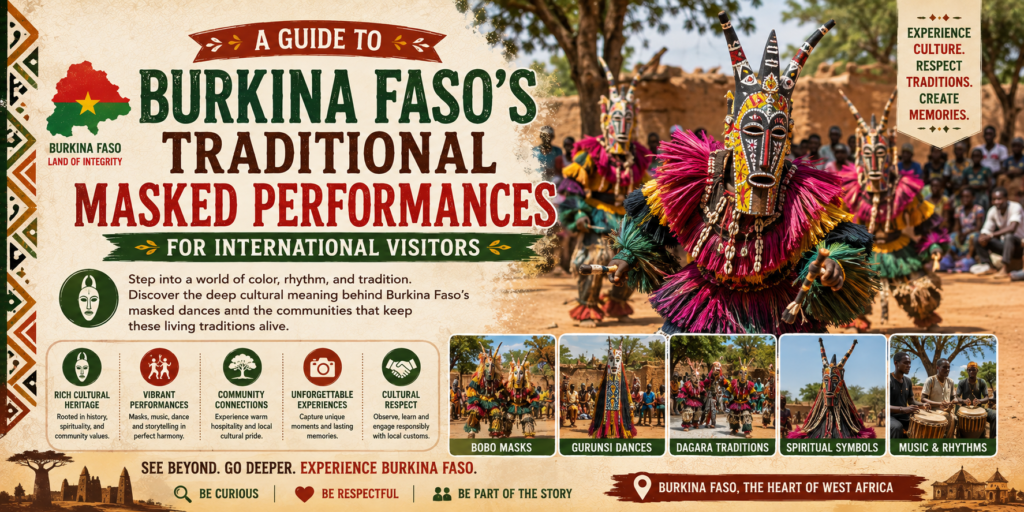
For international travelers seeking authentic, immersive cultural encounters, witnessing a traditional masked performance in Burkina Faso is an unforgettable experience. This guide covers the cultural significance of these sacred rites, key traditions to look out for, where to see them, essential visitor etiquette, and practical tips for planning your trip.
The Sacred Meaning: Why Masks Are Not “Costumes”
To appreciate a Burkinabè masquerade, visitors must understand one fundamental belief: to the community, a mask is not an object or a costume.
When an initiated dancer puts on the sacred mask and fiber suit, their individual identity disappears. The performer becomes an earthly vessel for a spirit (Dwo, an ancestral ghost, or a protective bush spirit).
Masked rituals take place during pivotal life and agricultural events:
-
Funerary and Memorial Rites: Guiding the souls of elders to the realm of ancestors.
-
Initiation Ceremonies: Welcoming young men and women into full adulthood.
-
Planting and Harvest Festivals: Invoking rainfall and offering gratitude to the earth for fertile crops.
-
Purification Rituals: Cleansing a village of negative energies or moral disharmony.
Iconic Mask Traditions You Can Encounter
Burkina Faso is home to more than sixty ethnic groups, many of whom possess distinct carving styles, materials, and dance traditions.
1. The Bwa (Bwaba) Plank and Leaf Masks
Originating around the Mouhoun River region, the Bwa people are world-renowned for two distinct styles of masquerade:
-
Wooden Plank Masks (Nwantantay): Towering up to two meters high, these flat wooden planks feature striking black, red, and white geometric patterns (checkerboards, zigzags, crescents). Every geometric symbol encodes a moral lesson or historical proverb.
-
Leaf Masks: Associated with Dwo (the god of nature and wilderness), these masks are woven entirely from fresh leaves, vines, and wild fibers. Because they represent uncultivated nature, they are created fresh for specific rites and dismantled afterward.
2. The Mossi Ancestral Figures
The Mossi, Burkina Faso’s largest ethnic group, use wooden zoomorphic (animal-shaped) masks topped with tall crests or human effigies. Known historically as Karan-wemba, some of these masks honor deceased female elders who achieved exceptional status. During performances, dancers mimic the grace and speed of gazelles, roosters, and calao birds to high-energy drumming.
3. The Bobo Horned and Bird Masks
Centering around Bobo-Dioulasso, the country’s cultural and musical capital, the Bobo create dynamic helmet and crest masks representing sacred animals such as oxen, warthogs, and hornbills. Painted with bright pigments, these masks appear in communal ceremonies to re-establish cosmic balance.
4. The Gurunsi (Kassena and Nankana) Zoomorphic Masks
Hailing from the southern border regions, Gurunsi carvers produce polished, helmet-style masks representing bush spirits, antelopes, and water buffalo. Their rhythmic movements are often punctuated by flutes, side-blown horns, and double-headed drums.
Where and When to Experience Masked Ceremonies
1. FESTIMA (International Festival of Masks and the Arts)
-
Location: Dédougou (western Burkina Faso)
-
What to Expect: Held biennially, FESTIMA is one of the largest gatherings of traditional masquerades in the world. It brings together hundreds of dancers from dozens of ethnic communities across Burkina Faso, Benin, Côte d’Ivoire, and Mali. It offers international travelers a rare chance to observe diverse traditions in an organized, respectful setting.
2. Cultural Encounters in Bobo-Dioulasso
Burkina Faso’s second city is celebrated for its rich arts scene. Local cultural centers and artisanal cooperatives can arrange respectful visits to nearby village celebrations during the dry season.
3. Village Rites During the Dry Season (November to April)
Most agrarian masquerades take place after the millet and sorghum harvests, between late autumn and early spring. These ceremonies occur organically in rural communities, making a knowledgeable local guide essential for finding and accessing them.
Essential Etiquette for International Travelers
Because these ceremonies are deeply sacred, foreign guests must approach them with cultural sensitivity:
-
Always Ask Before Photographing: Never point a camera or phone at a masked performer without explicit permission from village elders or your guide. Some sacred masks cannot be photographed under any circumstances.
-
Keep a Respectful Distance: The energy around a masquerade can be intense. Dancers move rapidly, and touching a mask or the performer’s costume is strictly taboo.
-
Dress Modestly: Cover your shoulders and knees. Rural communities appreciate conservative dress that honors the solemnity of their traditions.
-
Hire an Authorized Local Guide: A guide drawn from the local community explains the spiritual context, translates spoken proverbs, handles customary gifts (such as cola nuts or a modest donation to elders), and ensures you do not inadvertently cross sacred boundaries.
Planning Your Journey: Visas and Logistics
Visiting Burkina Faso requires thoughtful preparation, beginning with up-to-date entry documentation.
Travel Logistics Checklist:
-
Timing: Plan your trip during the cooler dry months (November through February) for comfortable travel conditions.
-
Health: Yellow fever vaccination is mandatory for entry. Ensure routine immunizations and antimalarial medications are arranged well in advance.
-
Currency: The West African CFA Franc (XOF) is the official currency; carry cash, as card processing is limited outside major urban centers.
Arranging Your Visa Smoothly
Before booking domestic travel or cultural excursions, international visitors must secure their official travel authorization. Travelers can review full entry guidelines, required paperwork, and eligibility details on the official Burkina Faso eVisa requirements before submitting an application.
Why Choose Us for Your Visa Application?
Navigating foreign visa paperwork should never stand between you and a once-in-a-lifetime cultural journey. Our specialized support services ensure your paperwork is processed accurately and promptly:
-
Reliable Travel Visa Services: Our global approach has assisted numerous travelers in successfully obtaining their visas with confidence.
-
Round-the-Clock Assistance: Reach out to us 24/7, and our customer support experts will respond within 72 hours to answer all your questions.
-
Experienced Visa Consultants: Receive expert guidance and thorough pre-submission reviews to ensure your application meets all consular requirements.
-
Efficient Visa Application Process: Apply for your visa in minutes with our simplified, user-friendly digital form.
Final Thoughts
A traditional masked performance in Burkina Faso is not just an artistic exhibition; it is an encounter with living history and sacred spirituality. Approached with an open mind, patience, and cultural respect, your journey into the heart of West Africa’s masquerade heritage will be one of the most rewarding adventures of your travels.