

When travelers think of the Philippines, powdery white beaches and turquoise waters often come to mind first. Yet, beyond the coastline lies one of Southeast Asia’s most dynamic cultural landscapes. The heartbeat of Filipino culture lives in its fiestas—vibrant, community-wide celebrations filled with rhythmic street dancing, infectious music, and mesmerizing attire.
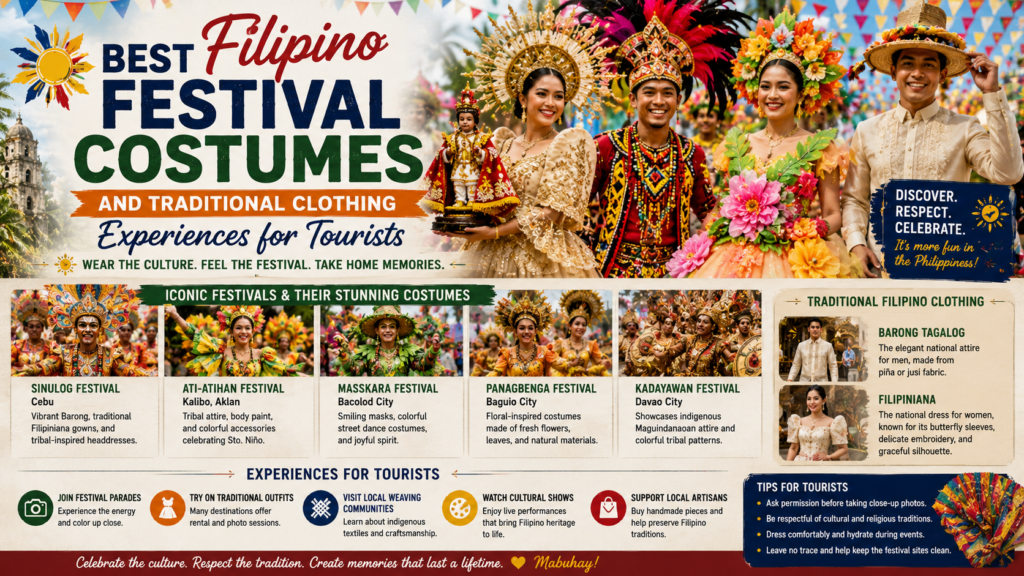
For curious visitors, admiring or even trying on traditional Filipino garments is one of the most immersive ways to experience the country’s heritage. From delicate Spanish-era formal wear in colonial districts to tribal woven garments and neon carnival plumes, here is your definitive guide to the best Filipino festival costumes and cultural clothing experiences.
1. The Crown Jewels of Philippine Traditional Wear
Before diving into specific festivals, it helps to know the foundational garments you will encounter across the islands.
The Barong Tagalog
The national garment for men, the Barong Tagalog, is an embroidered sheer tunic worn untucked over an undershirt (camisa de chino). Traditionally handwoven from sheer natural fibers such as piña (pineapple leaf fiber) or jusi (banana fiber), it is lightweight, breathable, and remarkably elegant. You will see locals wearing it at weddings, formal celebrations, and cultural festivals.
Baro’t Saya and the Maria Clara Gown
The traditional ensemble for women is the Baro’t Saya (literally “blouse and skirt”). During the Spanish colonial era, this evolved into the regal Maria Clara gown, celebrated for its flared floor-length skirt, ornate handkerchief collar (pañuelo), and distinctive arched butterfly sleeves.
Indigenous Handwoven Textiles
Long before Spanish influence, distinct indigenous groups across Luzon, the Visayas, and Mindanao crafted textiles embedded with folklore:
-
T’nalak (Mindanao): Woven by the T’boli “dreamweavers” from abaca fibers dyed in earth tones of black, red, and beige.
-
Inabel (Ilocos, Northern Luzon): Known for geometric motifs and exceptional durability.
-
Yakan Weaves (Basilan/Zamboanga): Celebrated for complex, high-contrast mathematical patterns.
2. Iconic Philippine Festivals with Unforgettable Costumes
If your travel itinerary lines up with the country’s festival calendar, you are in for a sensory feast. Here are the top celebrations renowned for spectacular street-dance costumes.
MassKara Festival (Bacolod City)
-
When: Every October
-
The Look: Radiant smiling masks, kaleidoscopic feathers, and shimmering beadwork.
-
What to Expect: Bacolod is known as the “City of Smiles.” Dancers take to the streets wearing hand-sculpted masks beaming with cheerful expressions, crowned with plumes of dyed feathers, sequins, and mirror tiles. It resembles a tropical Mardi Gras mixed with warm Filipino hospitality.
Sinulog Festival (Cebu City)
-
When: Third Sunday of January
-
The Look: Majestic Spanish-colonial gowns, golden crowns, and flowing royal vestments.
-
What to Expect: Honoring the Santo Niño (Child Jesus), Sinulog features street dancers swaying to a two-steps-forward, one-step-back beat. Lead dancers often dress as royal queens carrying statues of the Santo Niño, wearing tiered skirts, gilded bodices, and jeweled headdresses.
Ati-Atihan (Kalibo, Aklan) & Dinagyang (Iloilo City)
-
When: January
-
The Look: Warrior skirts, dark body paint, hand-carved wooden shields, and wild feather crests.
-
What to Expect: Often called the mother of Philippine festivals, Ati-Atihan honors both the indigenous Aeta people and the Santo Niño. Dancers cover their skin in dark charcoal and wear costumes made of woven palm fronds, shells, and bright plumes. Nearby Dinagyang in Iloilo elevates this with synchronized warrior choreography and towering decorative headpieces.
Pahiyas Festival (Lucban, Quezon)
-
When: May 15
-
The Look: Rustic farmer attire accented with kiping (rice wafers) and handwoven salakot hats.
-
What to Expect: A celebration of a bountiful harvest, Pahiyas transforms entire houses with vibrant chandelier-like decorations made of dried fruits, vegetables, and translucent dyed rice sheets. Street performers dress in bright cotton ensembles and wide-brimmed sun hats adorned with dried flowers and grains.
Panagbenga Festival (Baguio City)
-
When: February
-
The Look: Floral costumes blended with traditional Cordilleran woven vests (wanes and lufid).
-
What to Expect: Baguio’s Month of Flowers showcases floral floats alongside dancers donning indigenous Northern Luzon attire. Geometric Igorot handwoven wraps meet petal-shaped capes and fresh blossom accents.
3. Top Hands-On Traditional Clothing Experiences for Tourists
Watching from the sidelines is great, but taking part is even better. Here are ways you can respectfully experience these garments firsthand:
Dress Up for a Photo Walk in Intramuros (Manila)
Step back into the 19th century inside the walled city of Intramuros. Several local shops and cultural hubs near Fort Santiago and Casa Manila offer rental services for authentic Barong Tagalog and Maria Clara dresses. Strolling across cobblestone streets while wearing traditional attire makes for timeless travel photos.
Try On Tribal Garments in Baguio’s Mines View Park
High in the pine-covered mountains of Baguio, visitors can rent traditional Cordilleran highland garments for a small fee at scenic viewpoints. Friendly local elders help you fit the handwoven vests, woven skirts, and feathered headbands correctly.
Visit Living Textile Communities
For a deeper connection to living craft traditions, visit:
-
Lake Sebu, South Cotabato: Meet T’boli dreamweavers and learn the spiritual significance of the T’nalak cloth.
-
Vigan, Ilocos Sur: Visit heritage loom-weaving shops and pick up authentic Inabel shawls or table runners directly from artisans.
-
Yakan Weaving Village, Zamboanga: Watch weavers construct complex geometric headpieces (pegalian) and sashes right before your eyes.
4. Etiquette: How to Wear and Buy Traditional Filipino Clothing Respectfully
-
Distinguish Everyday Fashion from Sacred Patterns: A Barong Tagalog or contemporary Inabel jacket can be worn by anyone, anywhere. However, certain indigenous tribal wear holds spiritual meaning. Always ask local guides before wearing complete ritual garments.
-
Support Artisan Cooperatives: When buying souvenirs, purchase directly from local weaver guilds and authorized souvenir markets to ensure fair pay for traditional craftsmen.
-
Keep it Neat: The Barong Tagalog is designed to be worn untucked. Wearing an undershirt prevents sweat stains on delicate natural fibers like piña.
5. Preparing for Your Philippine Adventure: Travel Visas Made Simple
Before packing your bags and planning your festival itinerary, securing your entry documentation is the essential first step. Navigating visa requirements should never get in the way of experiencing local festivals.
Why Choose Reliable Visa Assistance?
-
Reliable Travel Visa Services: When heading abroad, having seasoned specialists handle your documentation makes all the difference. Professional services have assisted countless international travelers in securing their Philippine Visas quickly and smoothly.
-
Experienced Visa Consultants: Every country has unique entry guidelines, document checklists, and eligibility rules. Working with experienced consultants ensures your application avoids common errors and meets official standards for high acceptance rates.
-
Round-the-Clock Assistance: Travel plans don’t stick to regular office hours. With 24/7 client intake and prompt expert responses within 72 hours, you are never left guessing about your application status.
-
Efficient Visa Application Process: Instead of dealing with confusing government portals, complete an intuitive, simplified online form in just a few minutes.
Ready to explore the festivals, sights, and rich history of the islands? Apply for Philippines Visa and focus on planning the journey of a lifetime.
Frequently Asked Questions (FAQs)
Can foreign tourists wear a Barong Tagalog?
Yes, absolutely! Filipinos take great pride in seeing visitors wear the Barong Tagalog to weddings, events, or cultural sites. It is seen as a sign of respect and appreciation for local customs.
What is the most colorful festival in the Philippines for photography?
The MassKara Festival in Bacolod (October) and the Sinulog Festival in Cebu (January) are widely considered the most photogenic due to their oversized props, elaborate face coverings, and vibrant multi-tier costumes.
Do I need a visa to visit the Philippines?
Visa requirements depend on your nationality and intended length of stay. Many nationalities qualify for short visa-free entry, while others must secure an entry visa or eVisa prior to departure. Checking your specific status through an authorized application portal ensures an effortless arrival.