

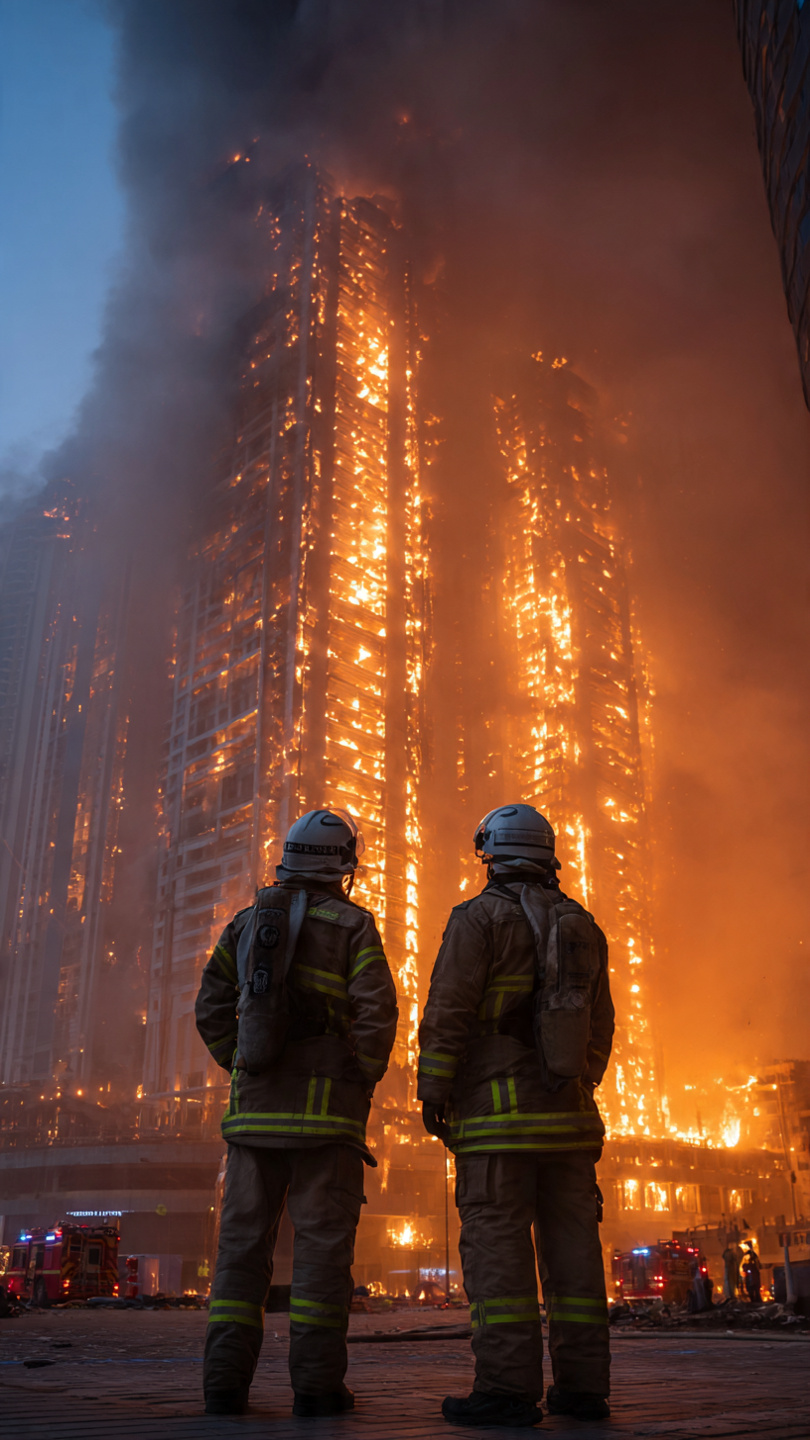
When one talks about fire safety, it is mostly associated with fire alarms, fire sprinkler systems, and fire escape routes. However, there are other equally important aspects that play a vital role in ensuring proper fire safety within a building. The first thing that needs to be considered is the expertise of the personnel involved. There should be a chartered professional engineer in the team to ensure that everything is handled properly. This will help in improving fire safety significantly.
What Does a Chartered Engineer Actually Do in Fire Safety?
Chartered engineers represent qualified professionals, whose education and experience satisfy strict requirements set out by engineering institutions. When talking about the role of engineers within fire protection, the latter perform much more functions compared to signing of architectural designs. Fire engineers conduct a comprehensive analysis of how fire and heat will spread in a certain building, analyzing its structure, material composition, ventilation systems, evacuation strategies, etc. Using this information, they create fire protection systems which can be effective when implemented in a certain building.
These engineers have the opportunity to get involved in all aspects of a construction project. They make sure fire prevention measures have been integrated into a building during its designing process. Once the construction is over, engineers examine installations made to make sure they are correct. Moreover, they provide recommendations for improving fire protection systems after a building starts functioning.
The Importance of Fire Training Alongside Engineering
However effective a fire protection system may be by design, the ability to achieve the desired results depends largely on those individuals who will use it. Therefore, it is important to understand that Fire Training plays a vital role in implementing a comprehensive fire safety program because without it all engineering solutions become ineffective.
Fire training enables occupants of the facility to know what to do in case of emergencies; it helps professionals responsible for operating safety equipment know how to manage such equipment effectively and efficiently; it enables fire wardens and emergency coordinators coordinate actions during evacuation and so on. As a result, the human aspect of the fire safety problem gets addressed alongside technical solutions.
Fire training programs vary depending on many factors: the characteristics of the facility, its occupants, and other aspects. For instance, a hospital, school, and warehouse require entirely different approaches towards training their occupants regarding fire safety issues. In this regard, the implementation of engineering solutions complemented by relevant training programs creates a robust fire safety strategy.
Why People Choose Us
Our company attracts property owners, developers, and facility managers by providing services that yield sustainable solutions.
Engineers with Expertise in Fire Safety Our engineers are qualified and highly knowledgeable when it comes to fire safety. Each recommendation we provide is based on solid engineering principles and current regulations.
Systems Approach to Safety In our practice, we do not differentiate between engineering design and the subsequent process of education and compliance with the existing regulations. Fire safety is viewed as a comprehensive concept.
Ability to Communicate Our team of experts has strong technical skills, but it is important to communicate these recommendations to our clients. We strive to present information as clearly as possible.
Solutions Specific to Your Property and Industry Our engineers will thoroughly analyze the building and its usage for each of our clients to offer solutions tailored to his needs.
Ongoing Support and Partnership We are ready to establish long-term partnerships and assist in solving emerging problems as they arise.
Conclusion
Proper fire safety is achieved through a combination of excellent engineering skills and realistic and humane preparation. The participation of a chartered engineer in your fire protection system guarantees that it is engineered to perfection and that there is true responsibility for it. Combined with excellent Fire Safety Training that prepares everyone in your facility for emergencies, this is the optimal method of achieving total protection. You owe it to yourself and the people around you to make sure that your safety precautions are taken to the next level.
FAQs
Q1: Why do I need a chartered engineer for fire safety rather than a general contractor?
A chartered engineer brings a level of technical training, legal accountability, and code expertise that general contractors are not required to have. For fire safety design and compliance, this depth of knowledge is essential to ensure systems actually work as intended.
Q2: What does Fire Training typically cover?
Training programs usually cover fire hazard awareness, proper use of fire extinguishers, evacuation procedures, roles and responsibilities of fire wardens, and how to respond to different types of fire emergencies. The content is tailored to the specific environment and occupant needs.
Q3: How often should fire safety training be refreshed?
Most fire safety authorities recommend that training be refreshed at least once a year. New staff should receive training as part of their onboarding, and additional sessions should be held whenever there are significant changes to a building’s layout or operations.
Q4: Can fire safety engineering be applied to older buildings?
Absolutely. Older buildings often require fire safety assessments to identify gaps between their existing systems and current standards. A qualified engineer can recommend practical, cost-effective upgrades that bring the building up to compliance without unnecessary expense.
Q5: How do I know if my current fire safety setup is adequate?
The most reliable way to assess your current setup is through a professional fire risk assessment carried out by a qualified engineer. This will identify any deficiencies, recommend improvements, and give you a clear picture of your building’s true level of protection.